Bryce Canyon Backpacking Guide: Under-the-Rim Trail & Riggs Spring Loop
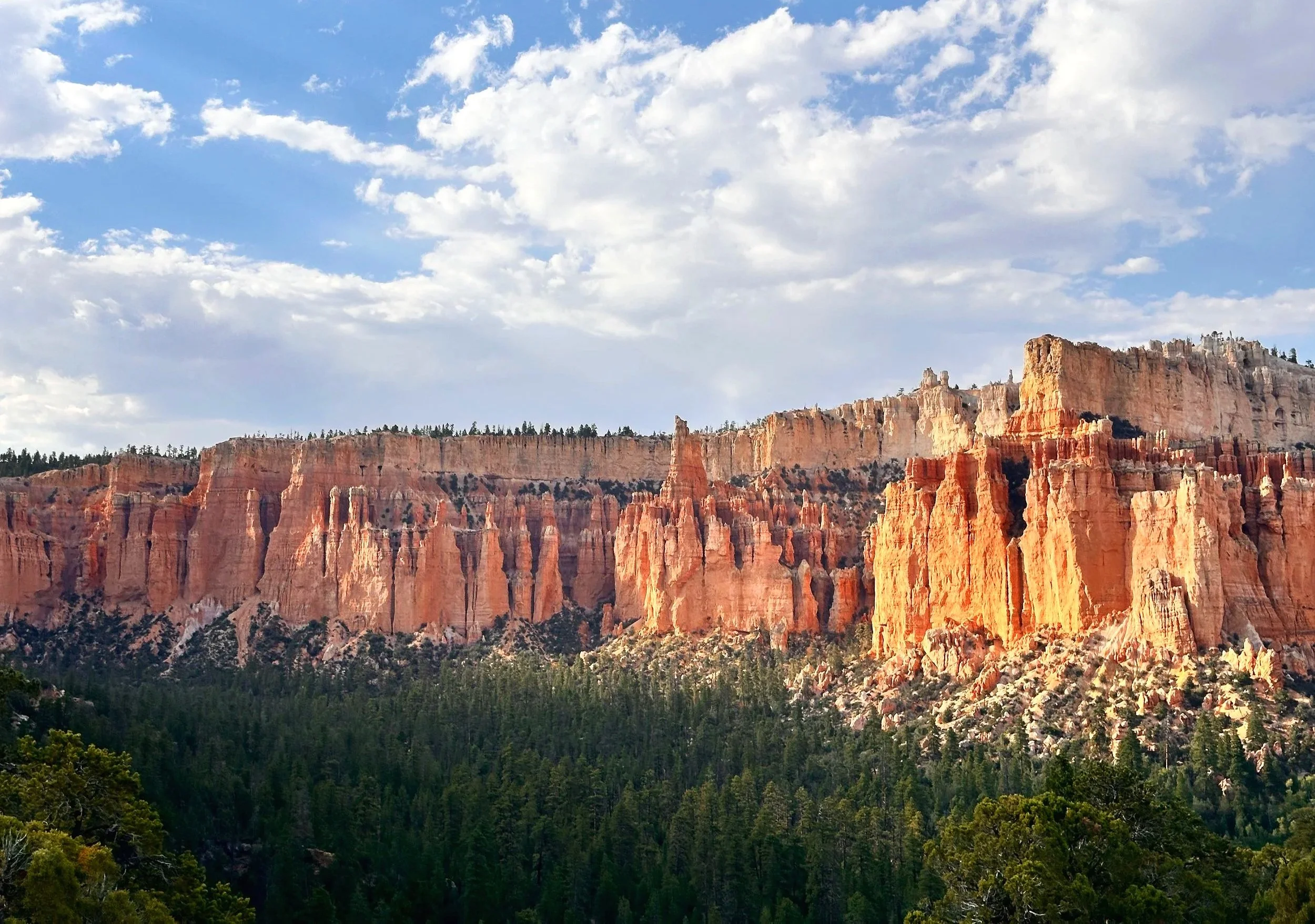
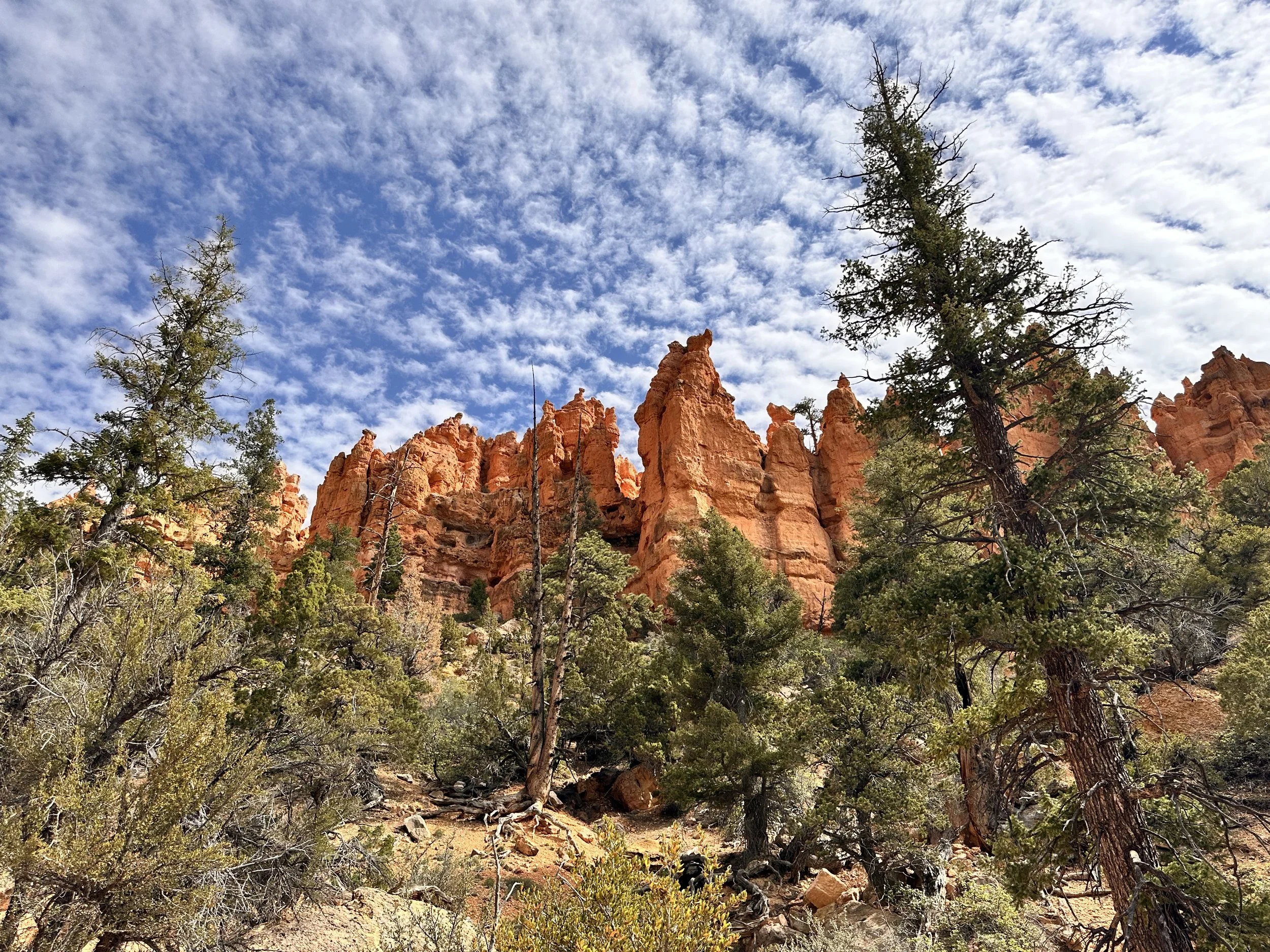
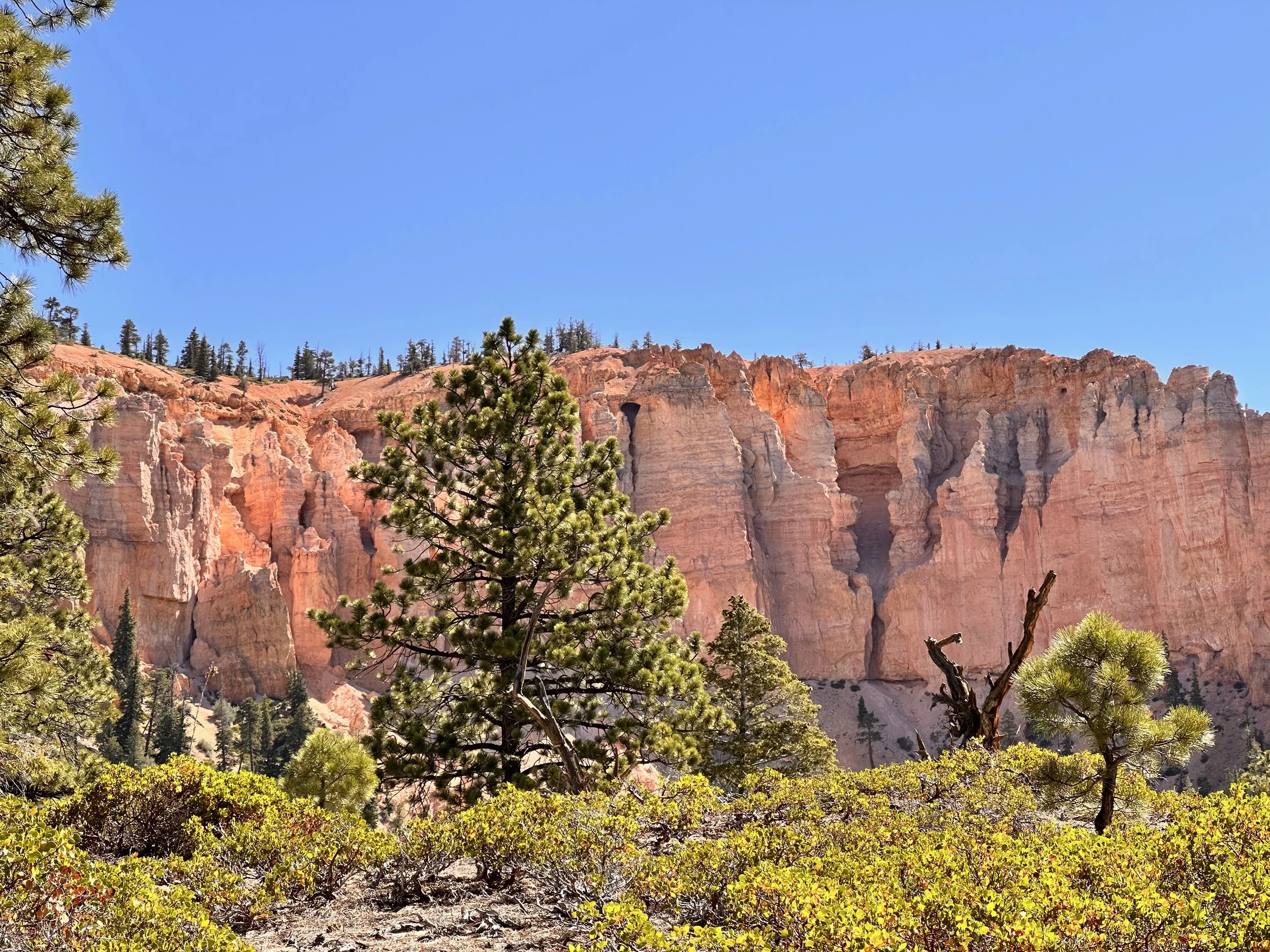
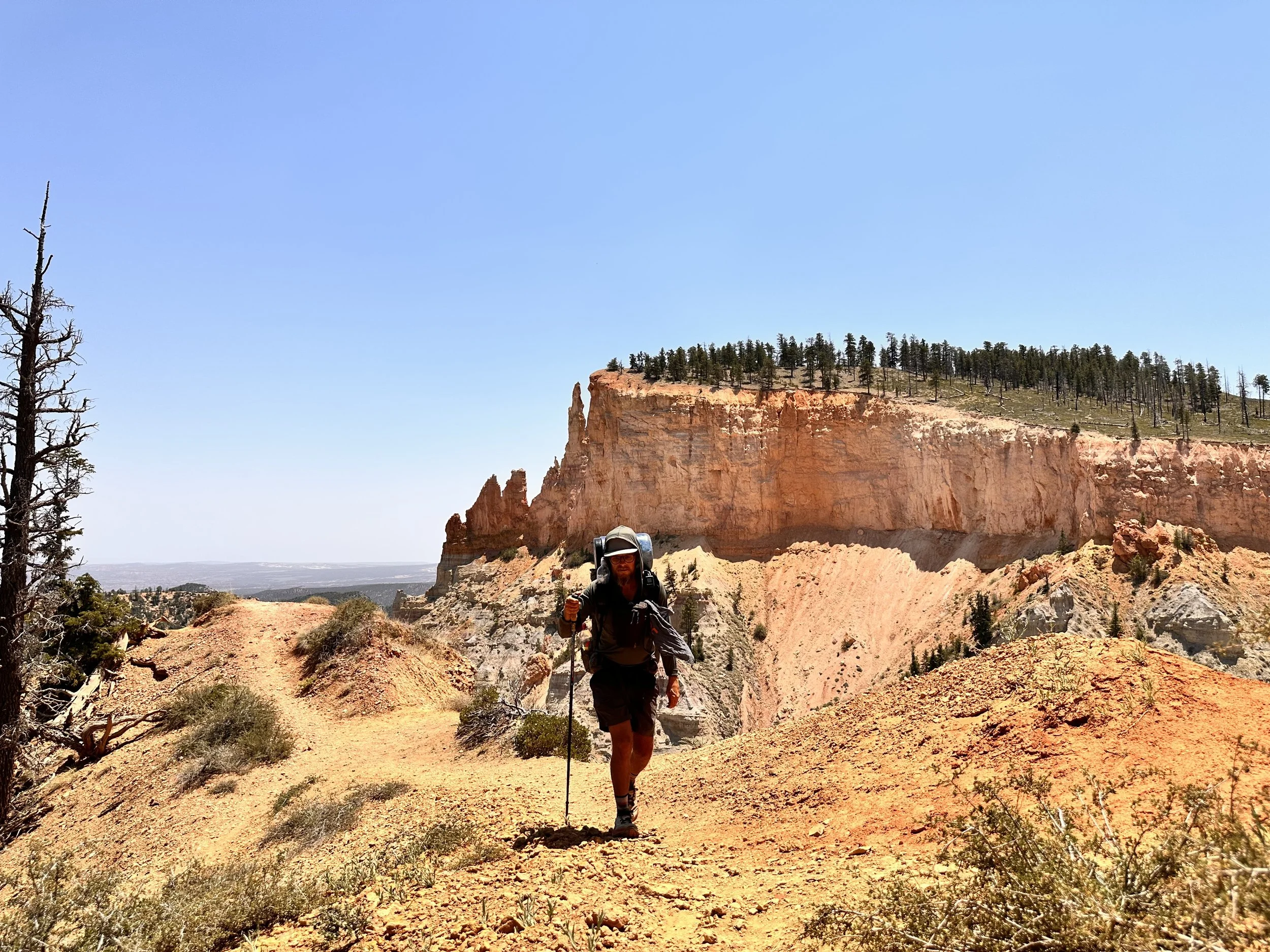
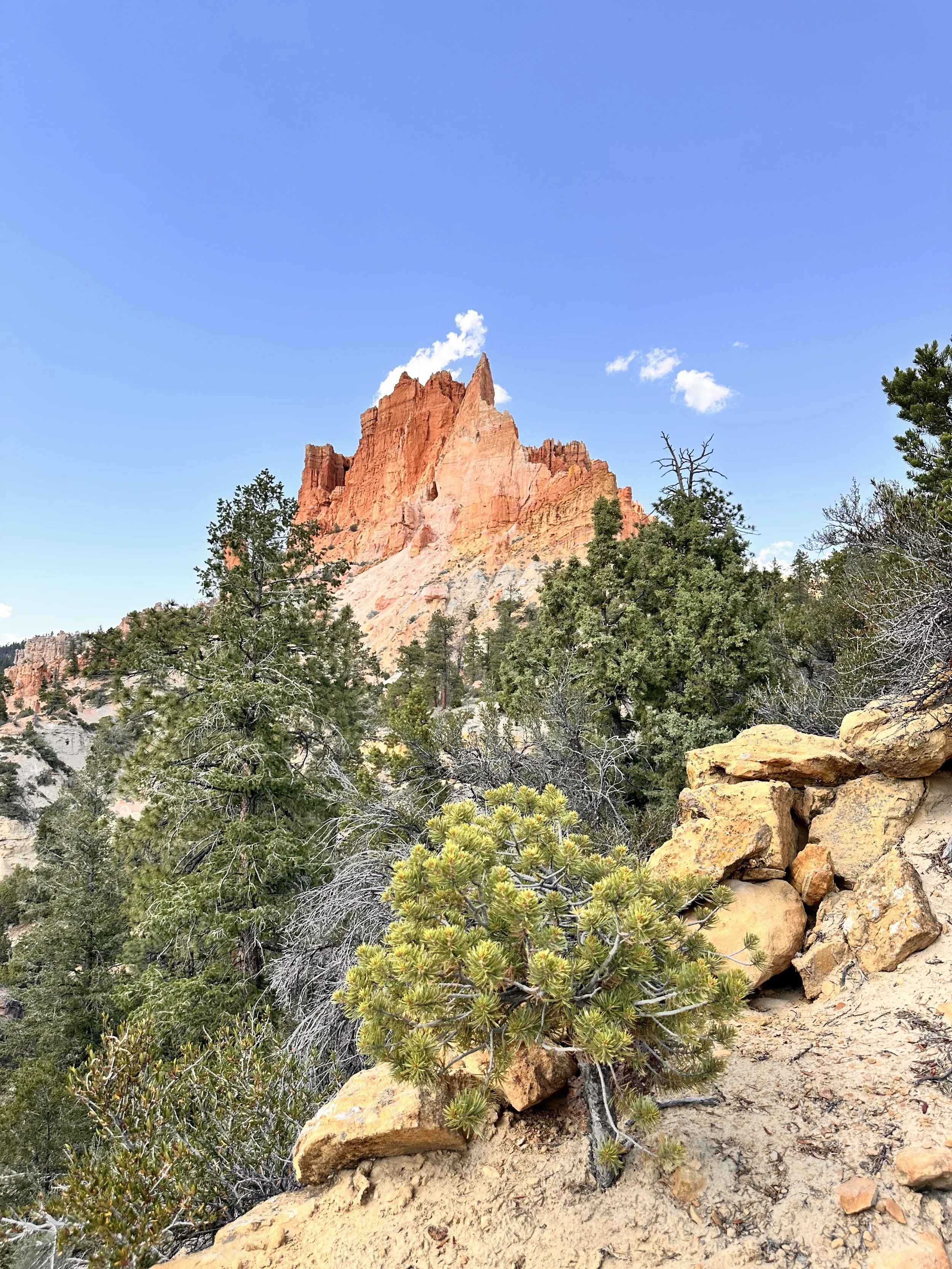
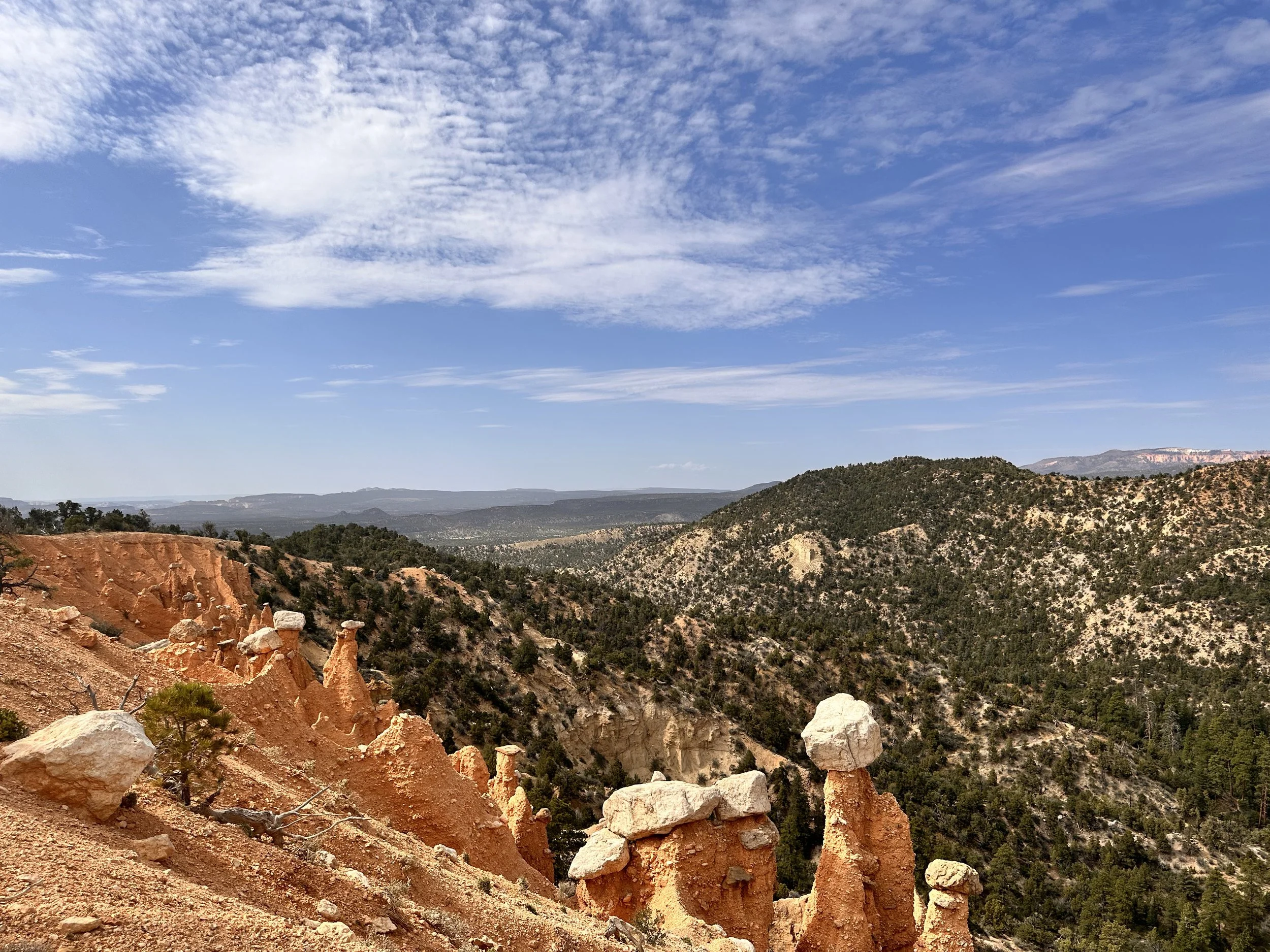
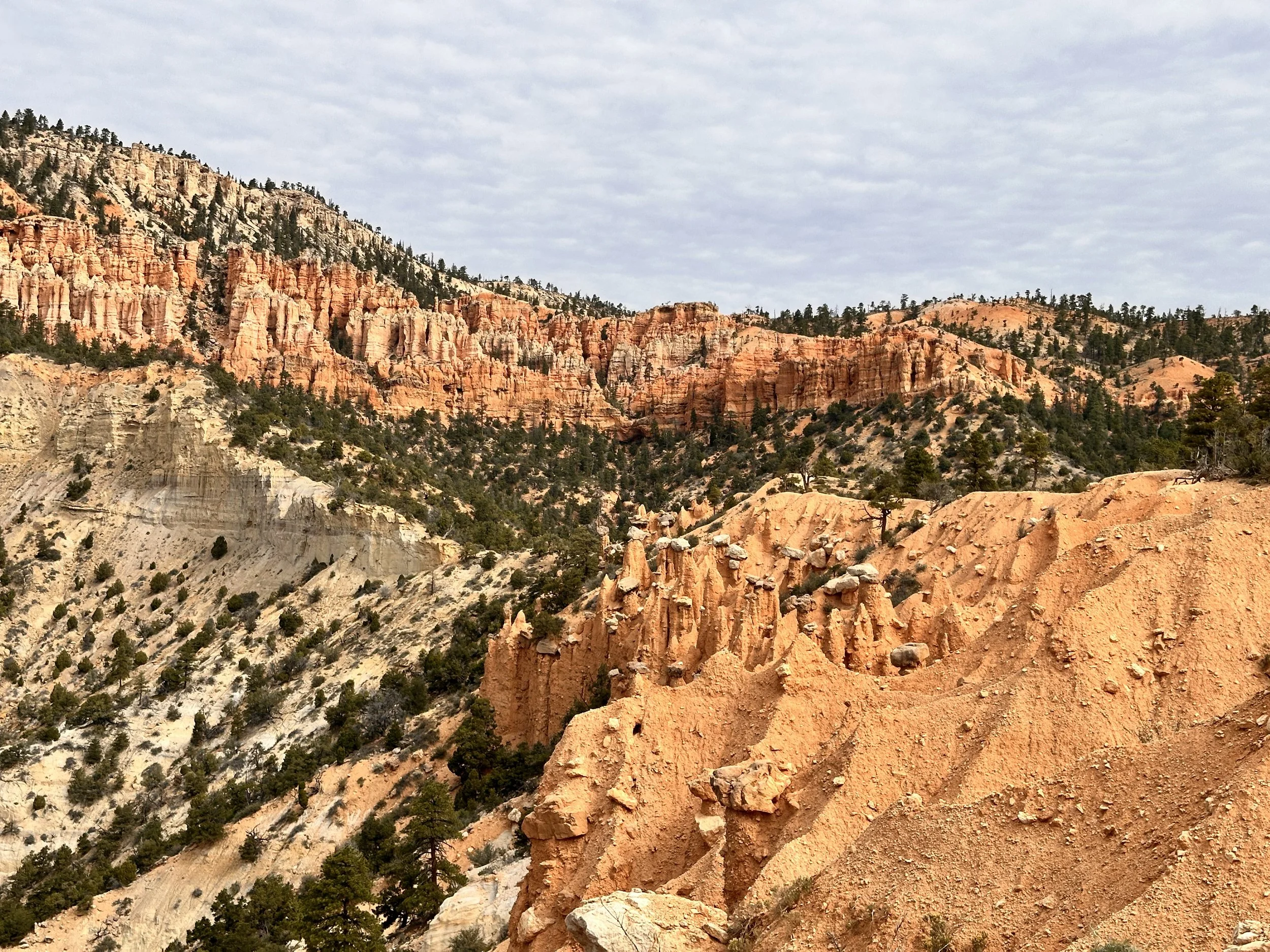
The towering layers of orange, pink, and white limestone rose above me, looking like ancient, weathered castles.
Bryce Canyon’s backcountry is defined not by its famous overlooks or crowded viewpoints, but by the dozens of horseshoe-shaped limestone amphitheaters carved into the eastern edge of the Paunsaugunt Plateau. Tucked away on the high steps of the Grand Staircase, the trail descends below the rim, where the wind whispers through ponderosa pines and every bend reveals a new, impossible landscape. It was here, in one of the nation’s smallest national parks, that I set out to carry everything I needed on my back to lose myself in the quiet heart of south-central Utah.
Under-the-Rim Trail & Riggs Spring Loop Map
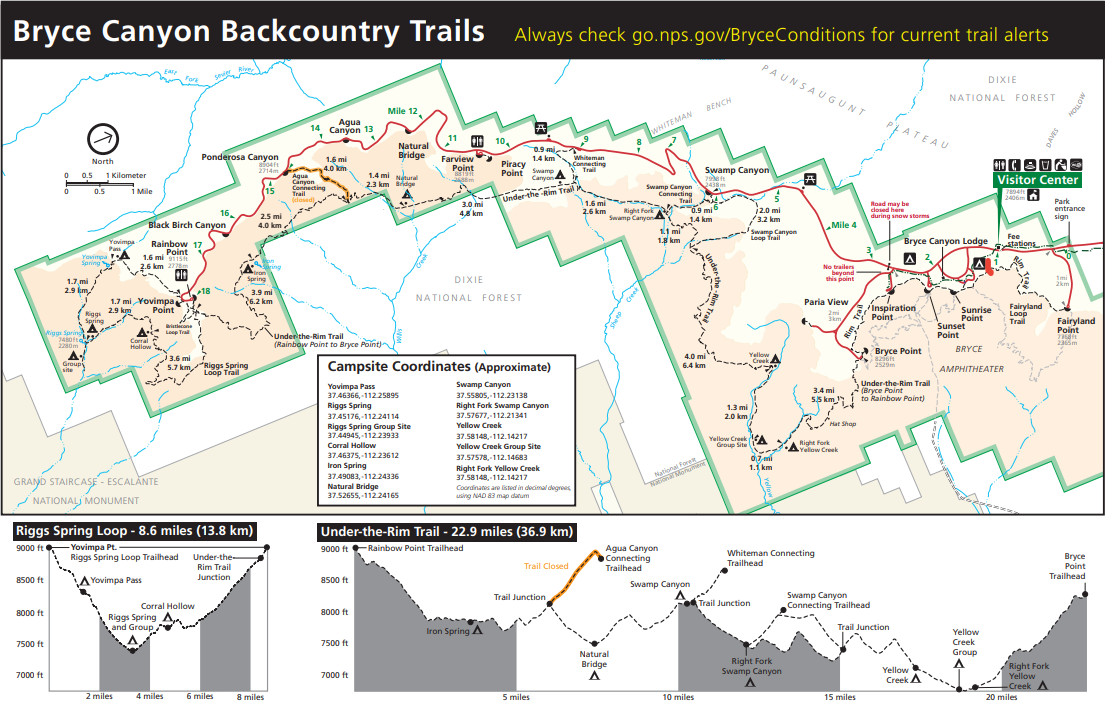
Map credit: nps.gov
Quick Trip Details
Location: Bryce Canyon National Park, Utah
Route: Riggs Spring Loop → Under-the-Rim Trail
Distance: ~31 miles total (8 miles on Riggs Spring Loop + 23 miles on the Under-the-Rim Trail)
Trip Length: 4 days / 3 nights
Elevation Gain/Loss: 4,284 ft gain / 3,549 descent ft loss
Difficulty: Moderate to Strenuous - primarily due to elevation changes, high altitude, summer heat, scarce water, and the remoteness of the trail.
Highlight Camp: Yellow Creek - the only campsite where I found reliable water during my early July trek. Iron Spring for the under rim views.
Best Time: Late spring to early fall, depending on snow, trail and water conditions. Summer requires especially careful heat and water planning.
Permits: Required for overnight backpacking. Bryce Canyon National Park Backcountry Permits & NPS Backcountry Info.
Private Shuttle Service: The Bryce Canyon National Park shuttle only serves the main amphitheater area, so getting to Rainbow Point requires arranging separate transportation. I used Bryce Canyon Scenic Tour and Shuttle Services and had a great experience with them for a reasonable price.
Highlights
Wild geology around every bend - pink cliffs, fins and strange formations that look like the earth got carried away with itself.
Ponderosa forests and high-country meadows - a surprisingly green contrast to all that red and white rock.
High elevation relief - when the lower deserts of Utah are baking, Bryce at least gives you a fighting chance.
Plenty of solitude - once I left the popular overlooks and trailheads behind, the crowds disappeared remarkably fast.
A surprisingly wild side of Bryce - deer, blue jays, prairie dogs and long stretches where the only thing making noise is you.
Good shuttle options - which is especially useful when your trailhead and your tired legs end up many miles apart.
Lowlights
The trail is a bit of a sadist - down into a drainage, back up, down into another one, back up again. Repeat until morale improves.
You’ll probably need a shuttle - hitchhiking isn’t allowed in Bryce Canyon National Park, so a little logistical planning goes a long way.
The famous hoodoos mostly stay behind - much of the Under-the-Rim trail explores the quieter backcountry rather than Bryce’s greatest-hits scenery.
Water is the real boss out here - I learned this one firsthand. My carefully planned itinerary lasted right up until the Utah sun and unreliable water sources had other ideas.
Summer monsoons - July and August can bring afternoon thunderstorms, lightning and sudden downpours.
Difficulty
Total Distance: ~31 miles (for both trails)
Total Elevation Gain/Loss: 4,284 ft gain / 3,549 ft loss
Water Availability: Water can be scarce and unreliable along the Under-the-Rim Trail, especially in summer. Check current conditions before your trip, plan for long dry stretches and never assume a marked water source will be flowing.
I rate this hike moderate to strenuous, mostly because of the constant ascents and descents as the trail dips in and out of drainages below the rim. There’s nothing particularly technical about the hiking, but summer heat, elevation and scarce water can turn an otherwise straightforward backpacking trip into a serious undertaking. Your experience, fitness, pack weight and willingness to keep climbing one more damn hill will certainly affect how difficult it feels.
Day 1 - Into the Quiet - Riggs Loop Trail
Yovimpa Point → Riggs Spring Campsite
Distance: ~4 miles
Elevation: ↘ 1,663 ft | ↗ 60 ft
Water: Carried 4 liters + a small trickle at Riggs Spring that I was able to filter about a ½ liter.
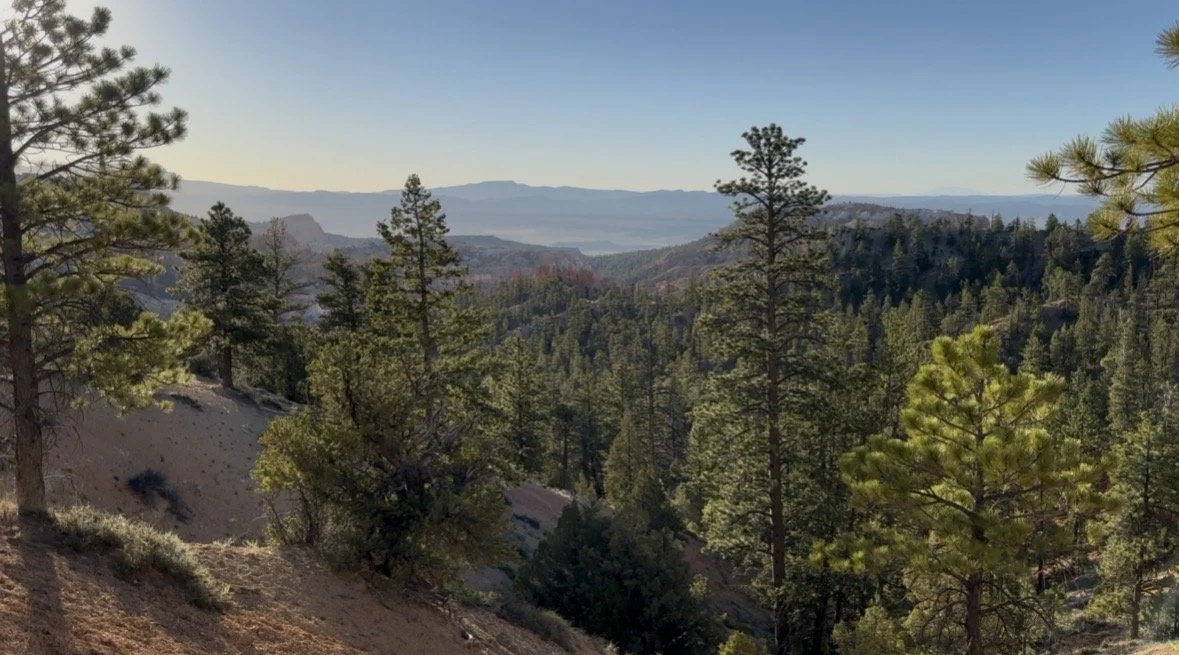
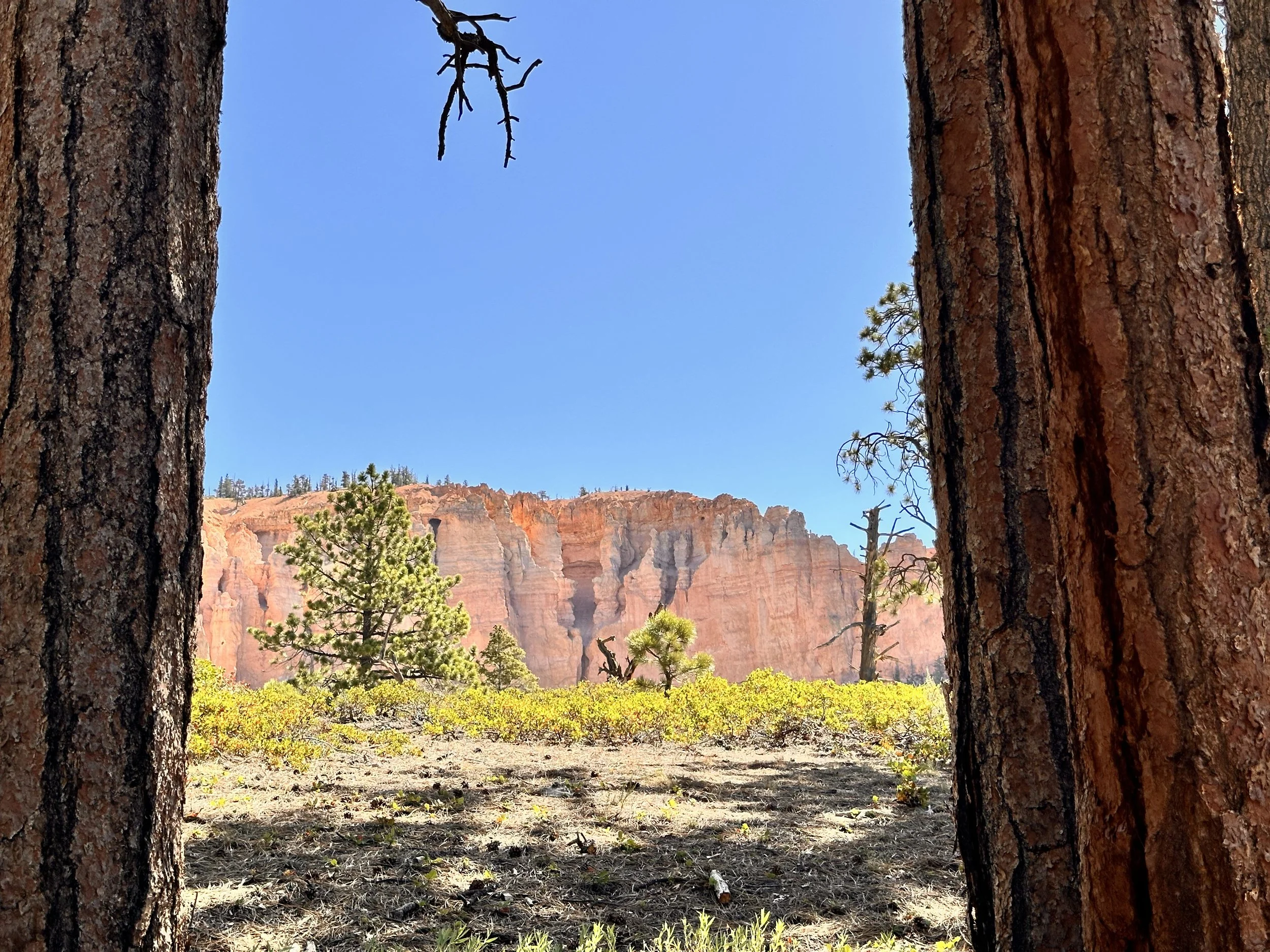
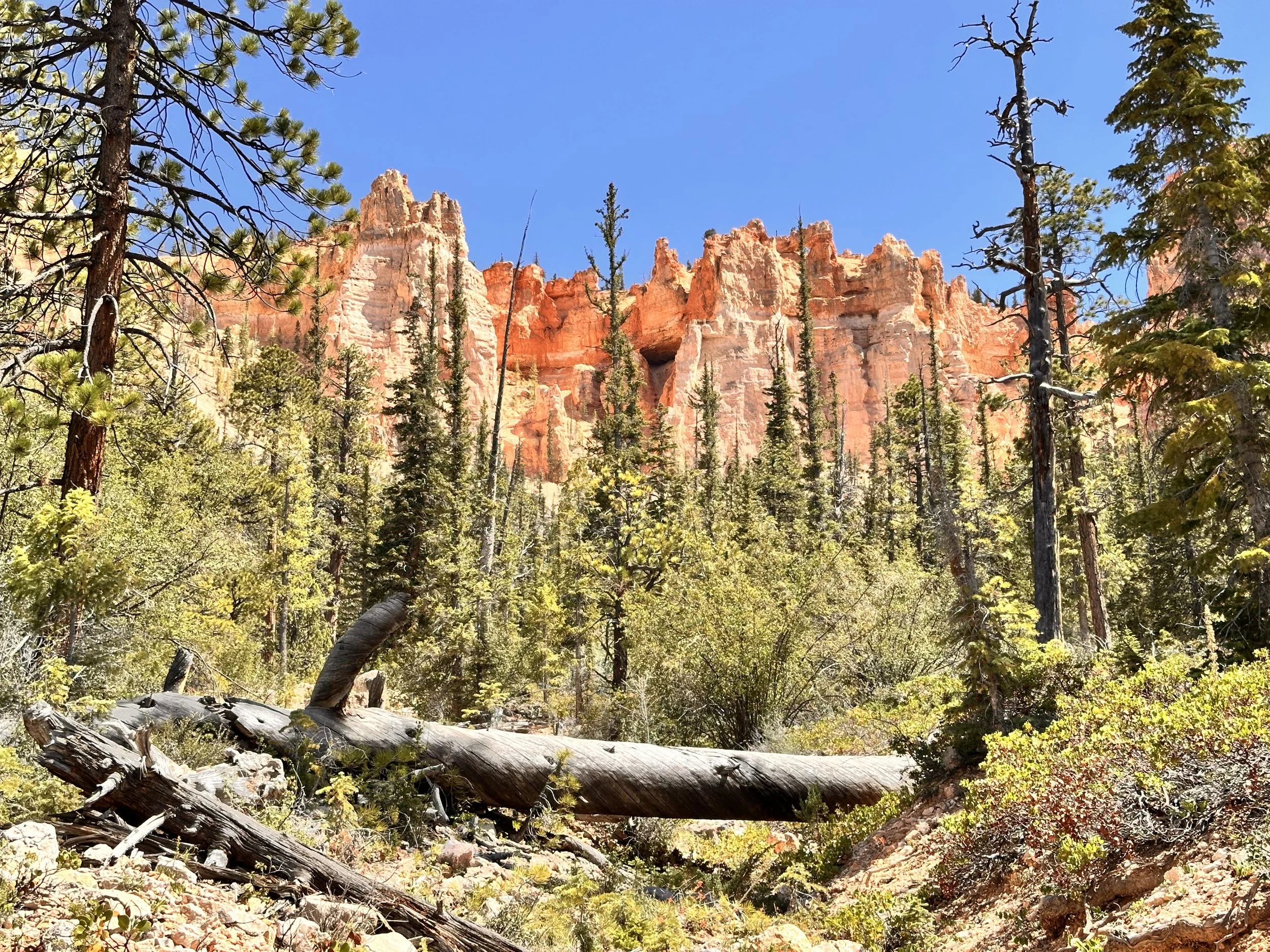
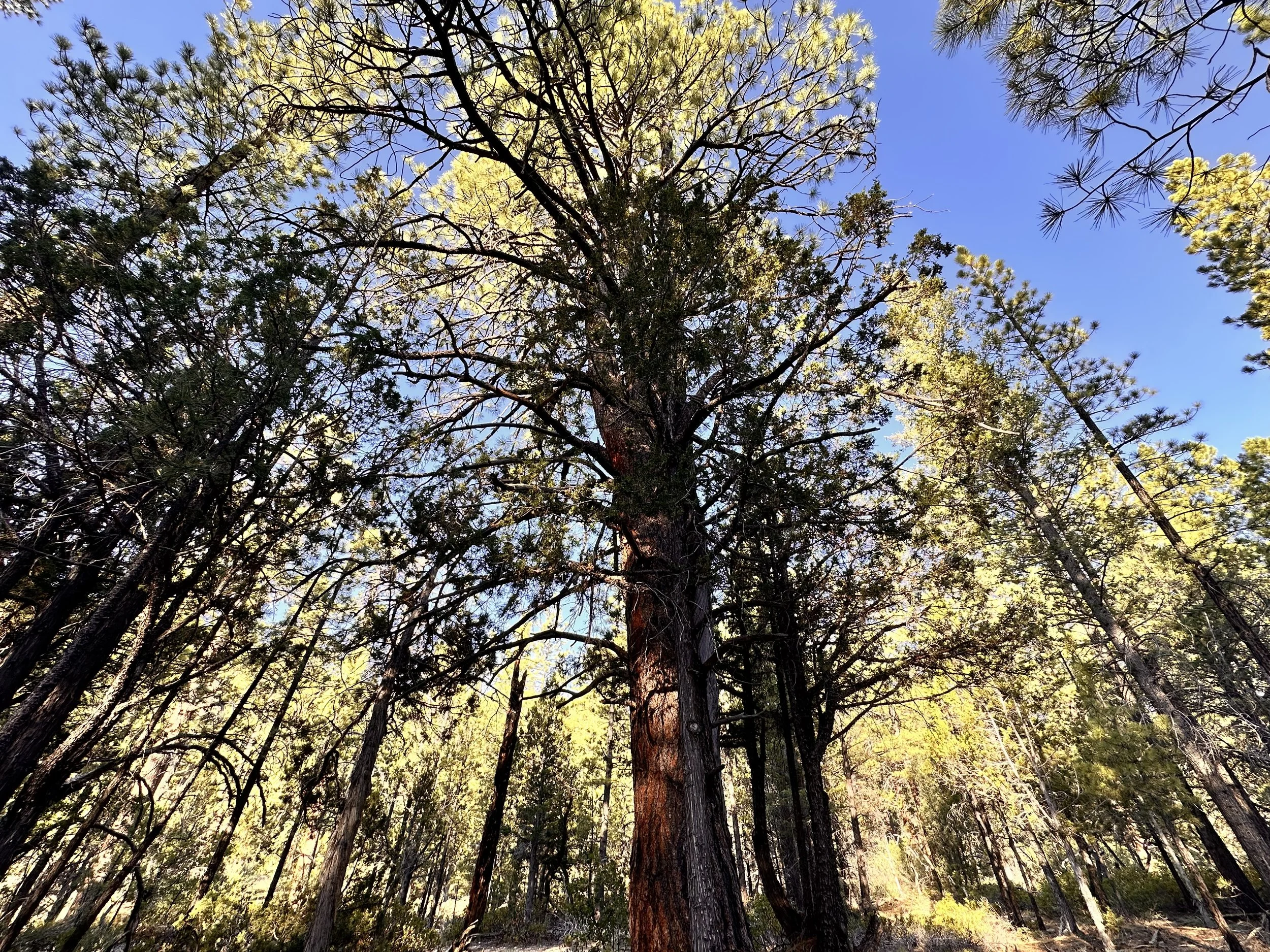
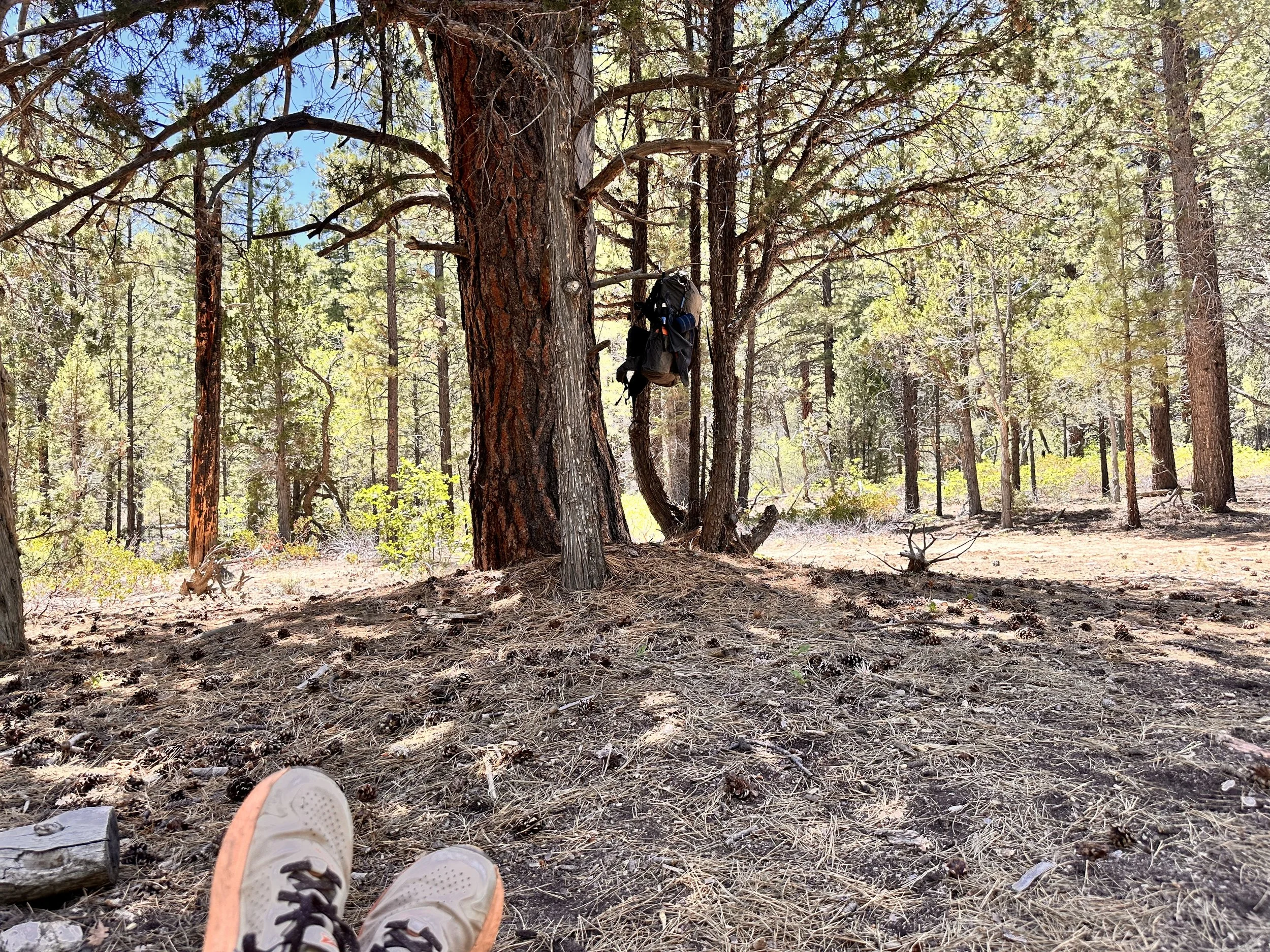
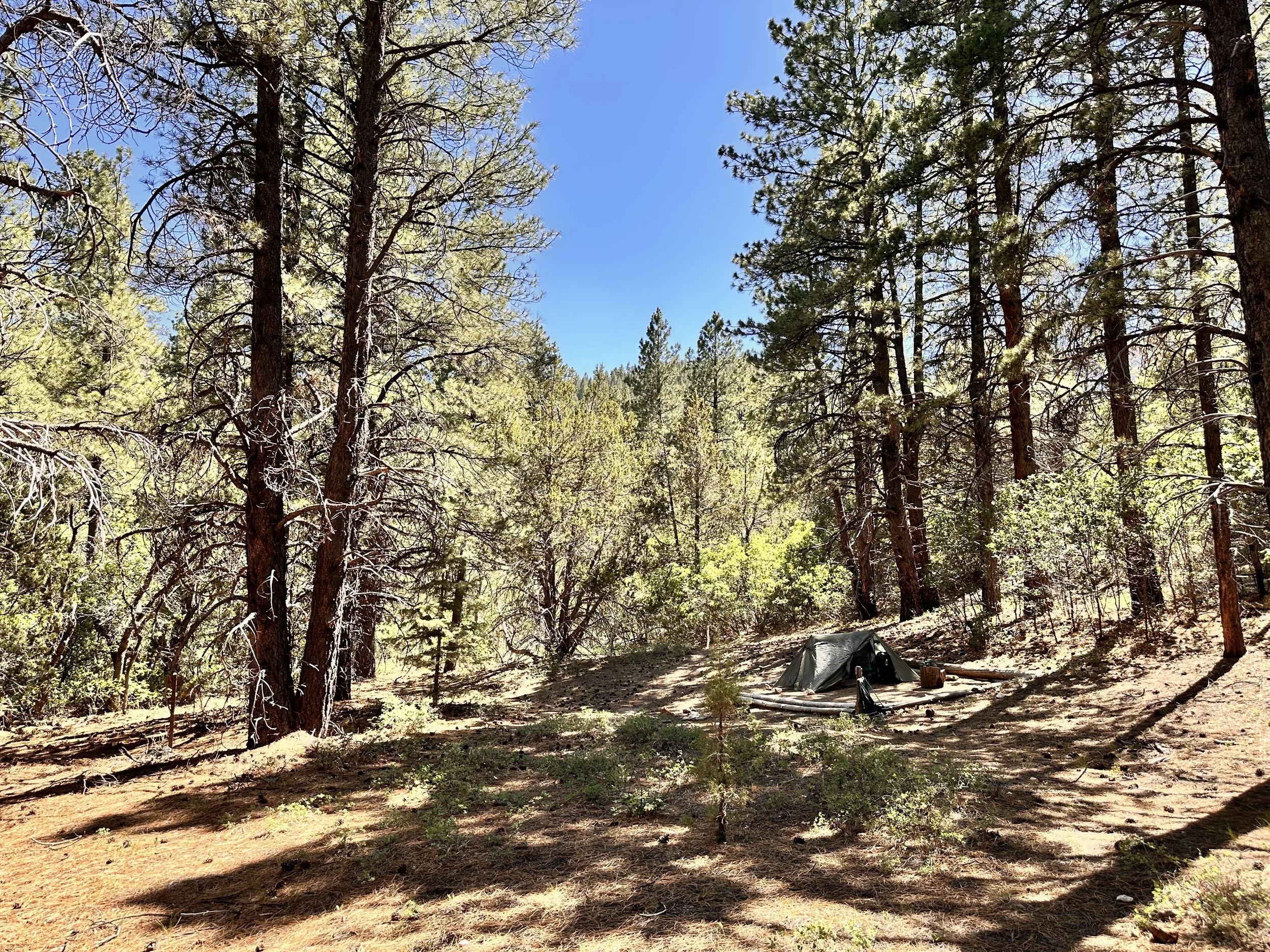
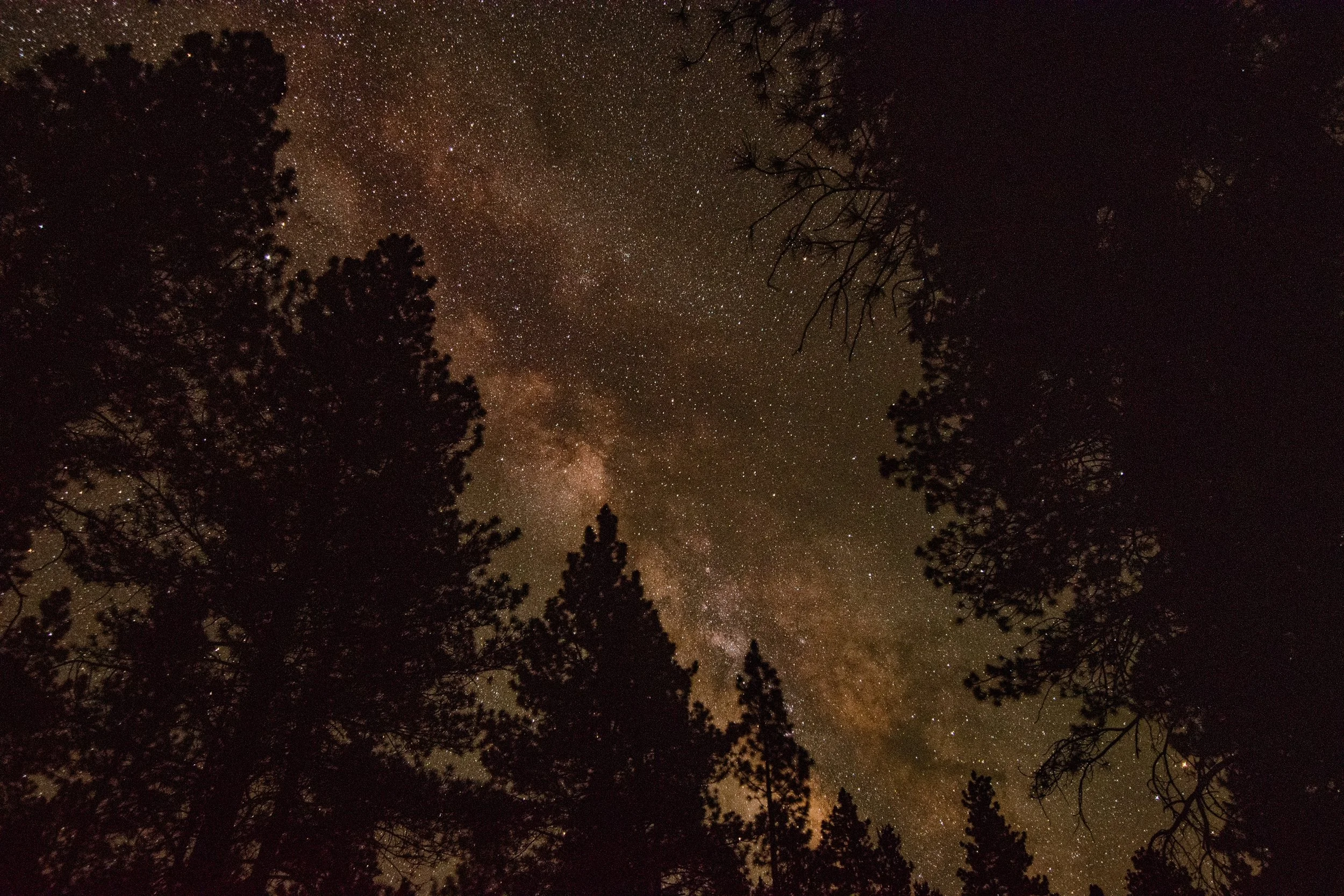
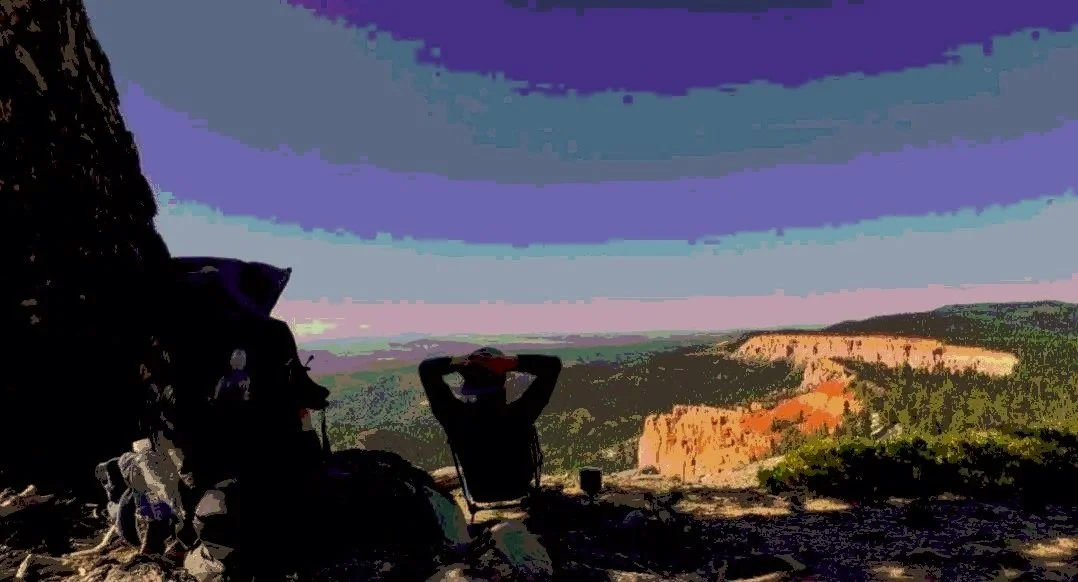
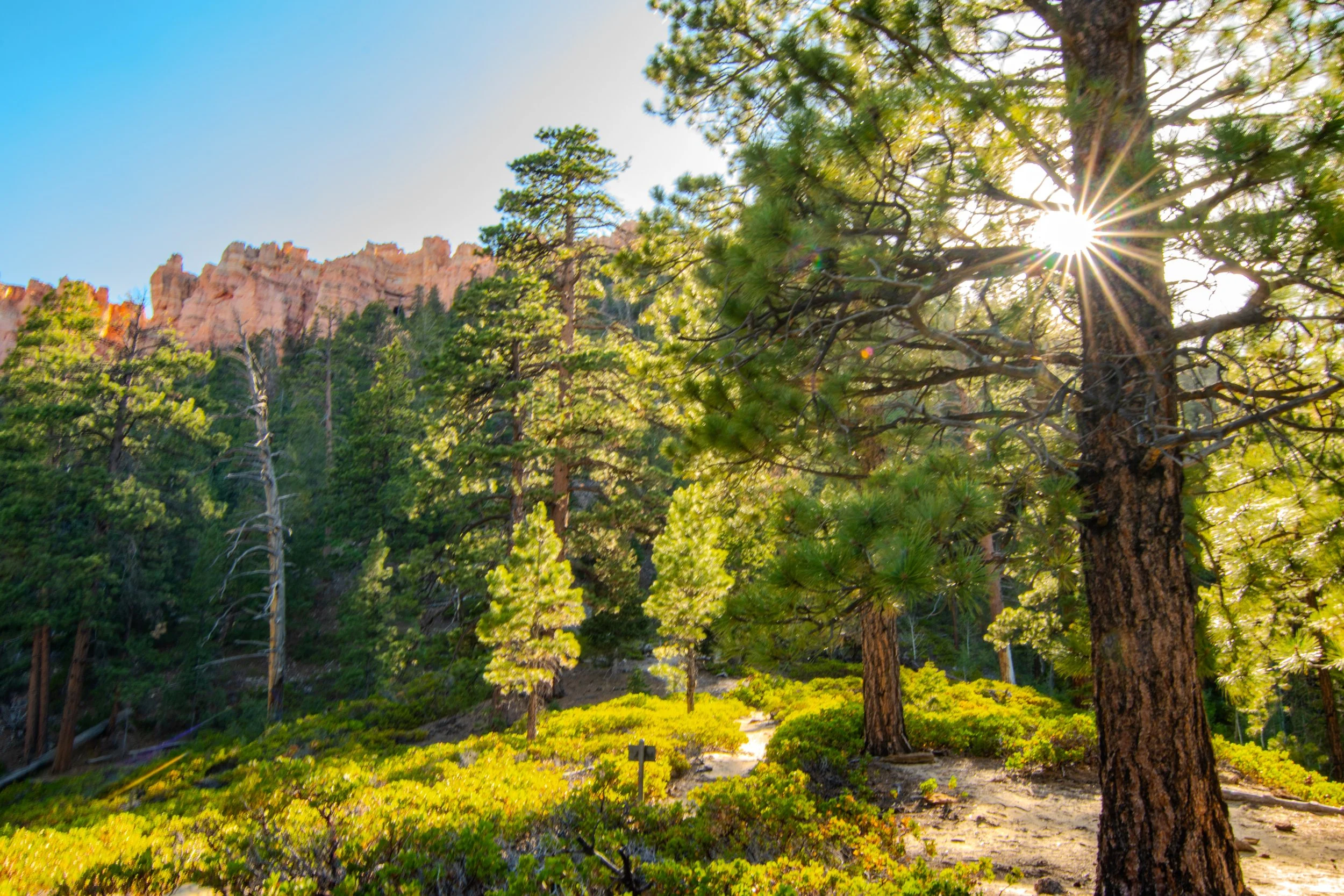
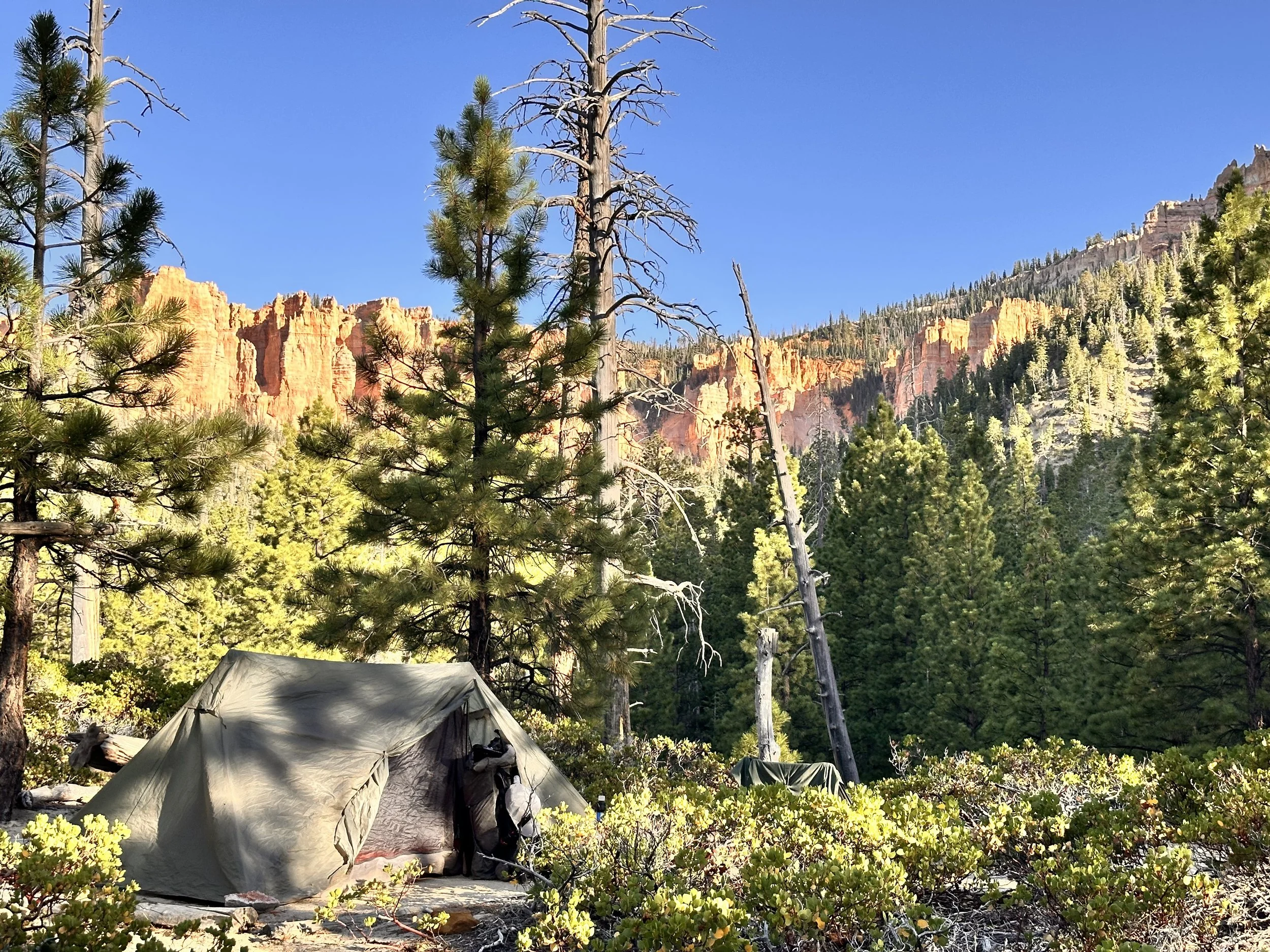
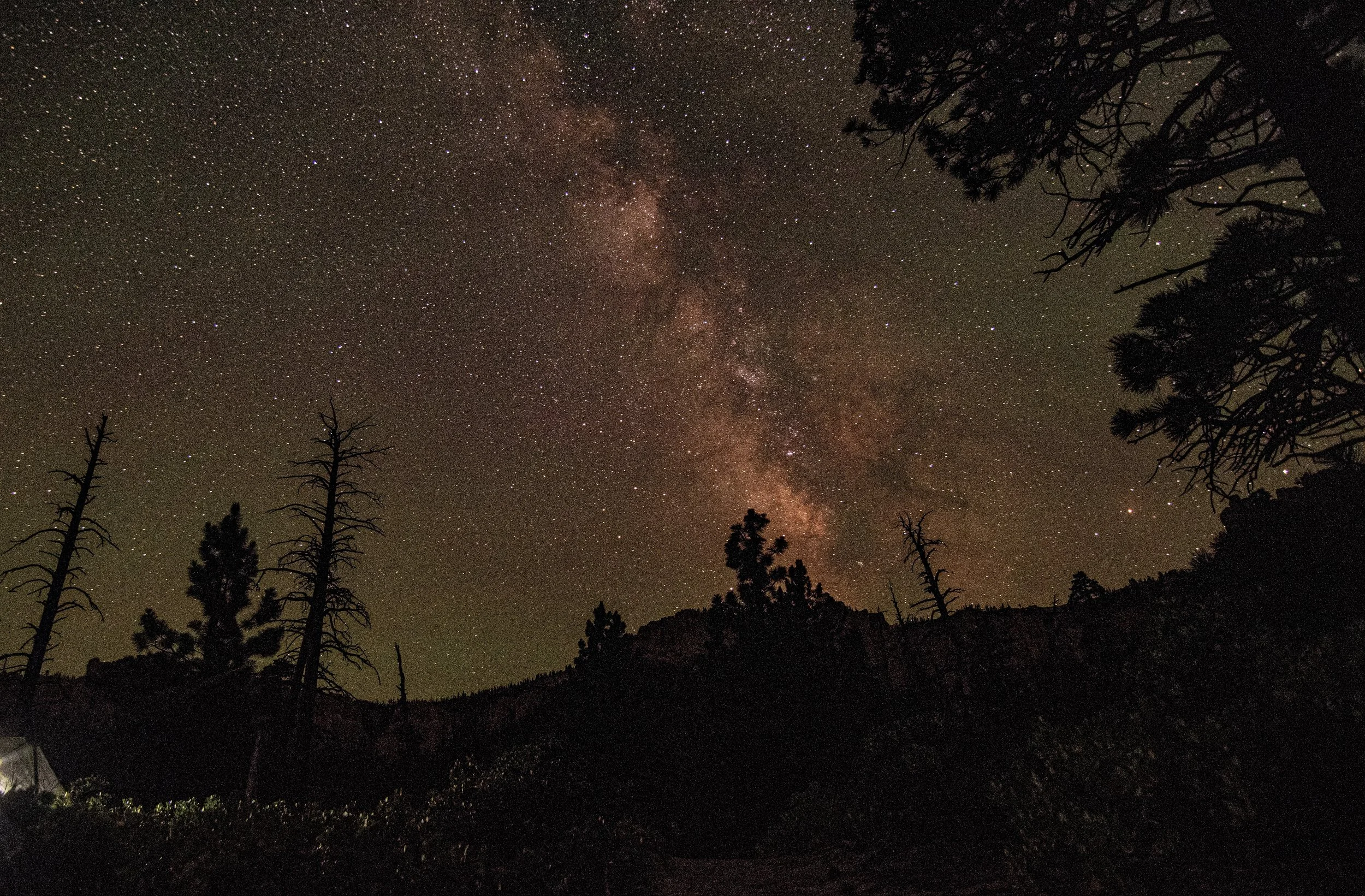
After being dropped off at Yovimpa Point, I took my first steps beneath Bryce Canyon’s famous rim and into a world few visitors ever experience. Within a short distance, the crowds faded behind me as the trail wound through towering ponderosa pines and quiet stretches of forest. My destination was Riggs Spring campsite. A relatively easy first day designed to ease into the trek and let both my body and mind settle into trail life. That evening, as the temperature dropped and the stars began to appear overhead, I was reminded that backpacking isn’t about rushing from one campsite to the next. It’s about slowing down enough to notice where you are.
Ty Trek note: A slow day to get my trail legs and settle into the adventure.
Day 2 - Settling into the Journey
Riggs Spring Campsite → Iron Spring Campsite
Distance: ~9 miles
Elevation: ↘ 1,345 ft | ↗ 1,736 ft
Water: Carried 2 liters + 2 liters cached at Rainbow Point
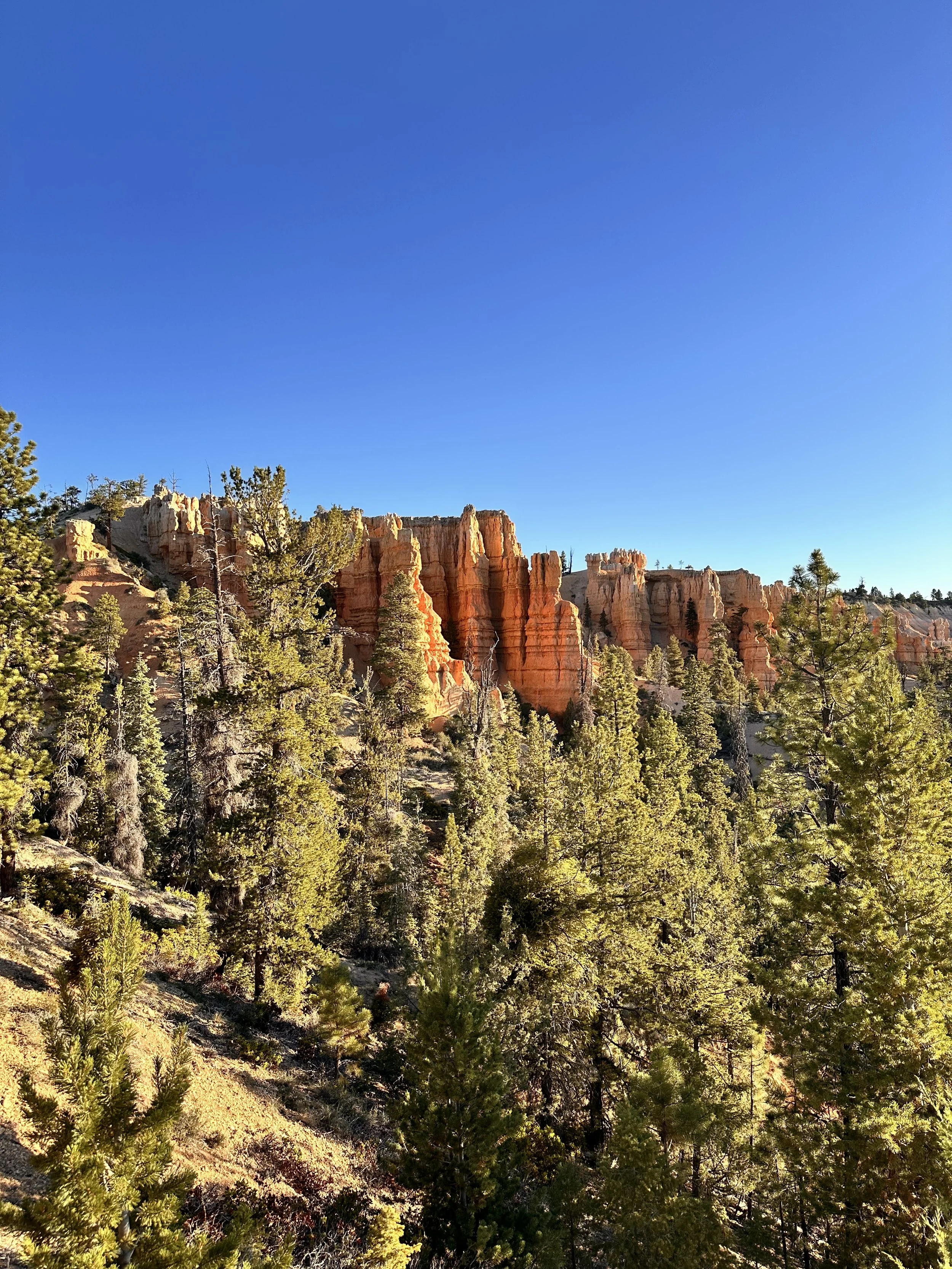
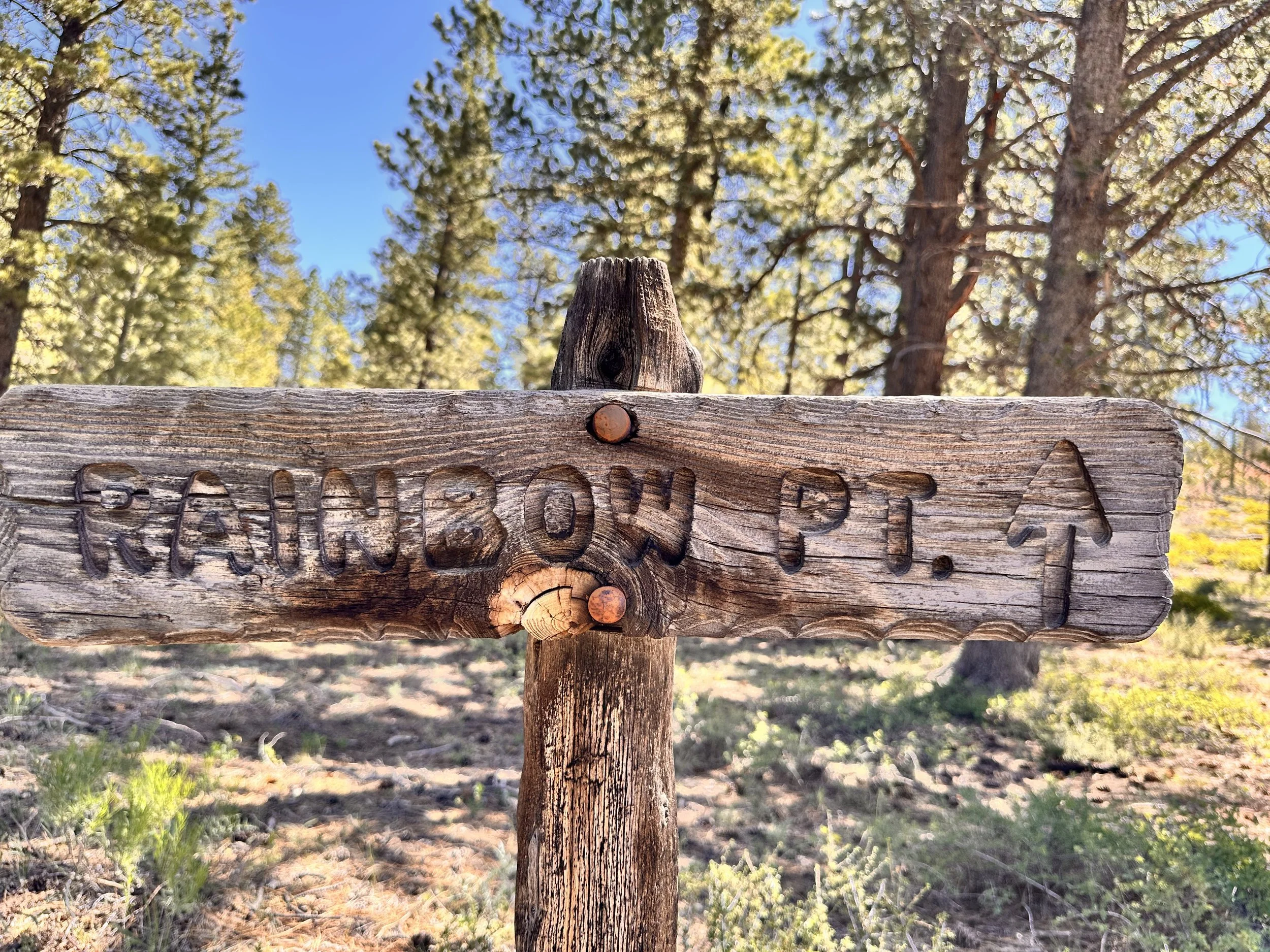
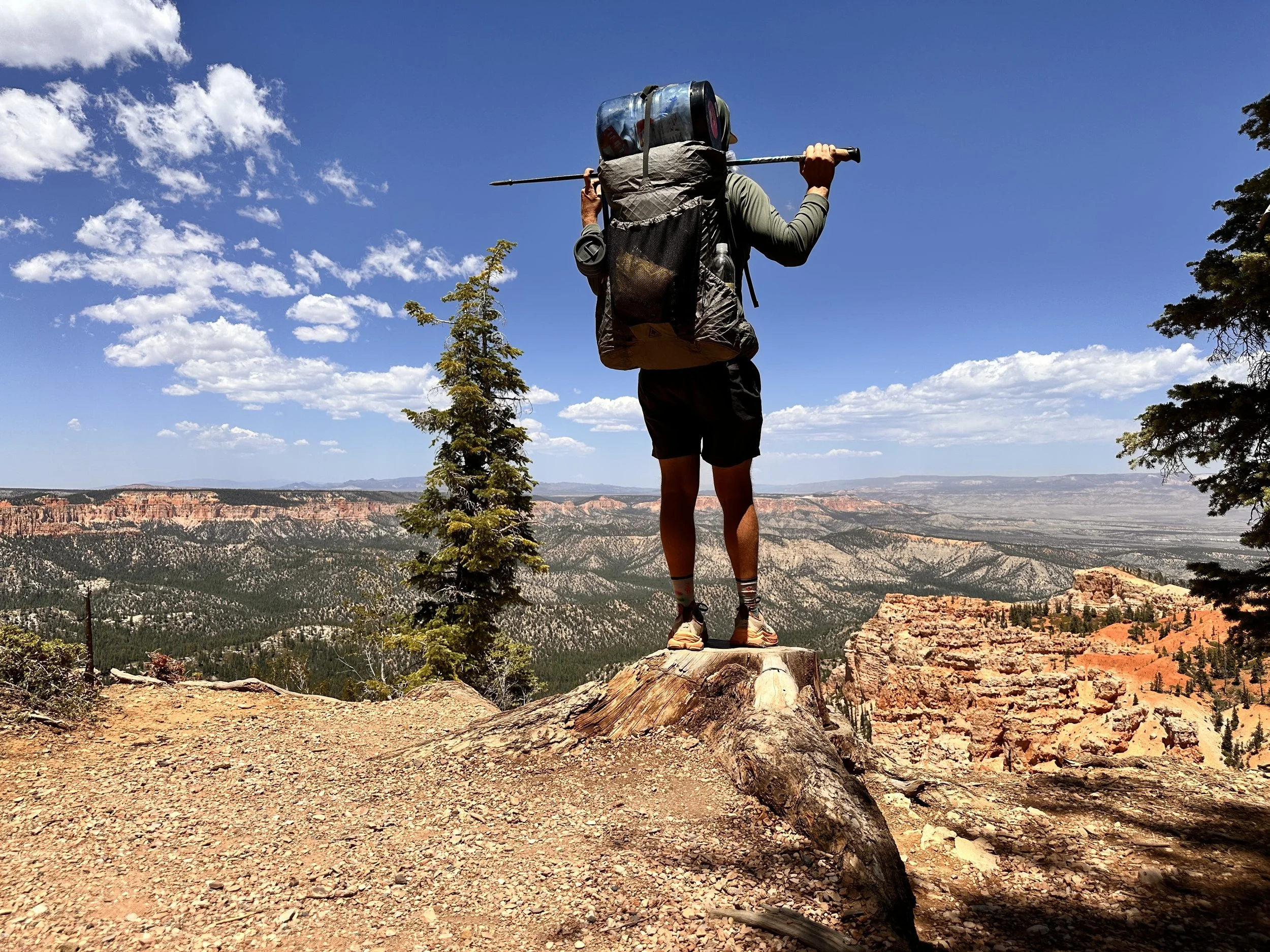
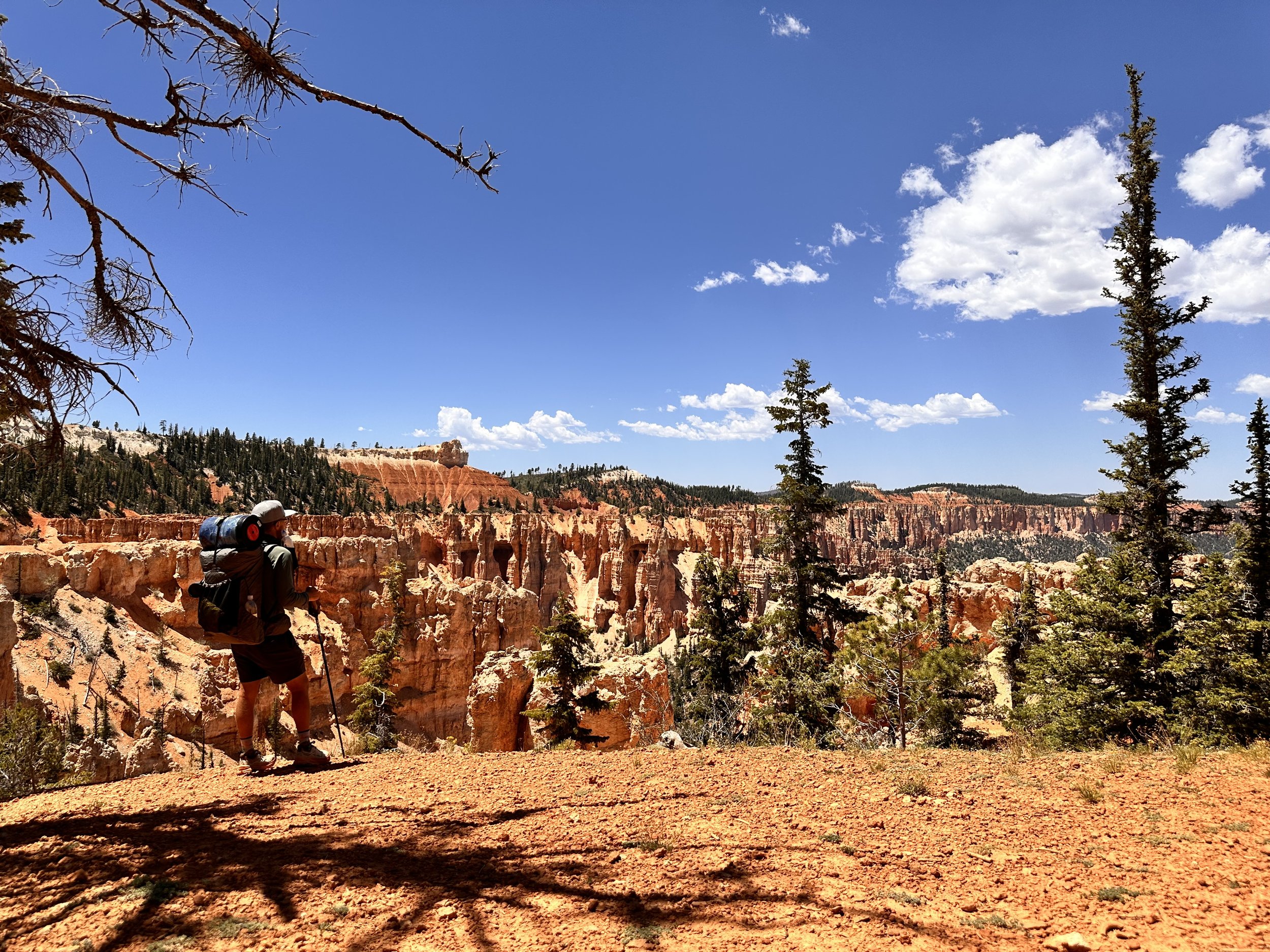
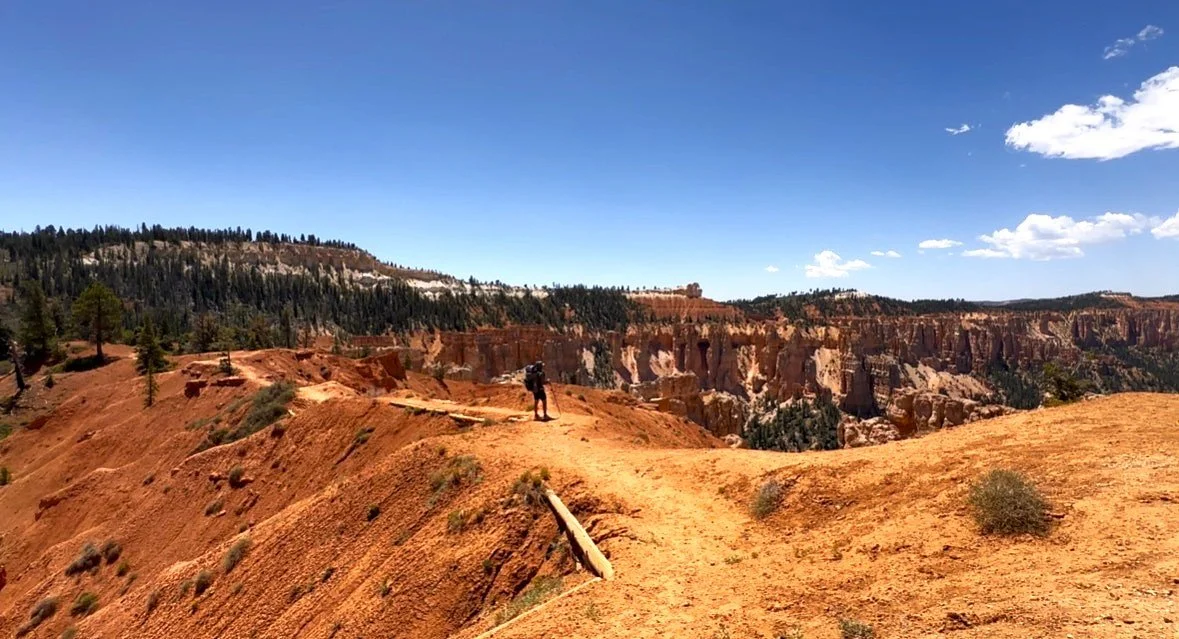
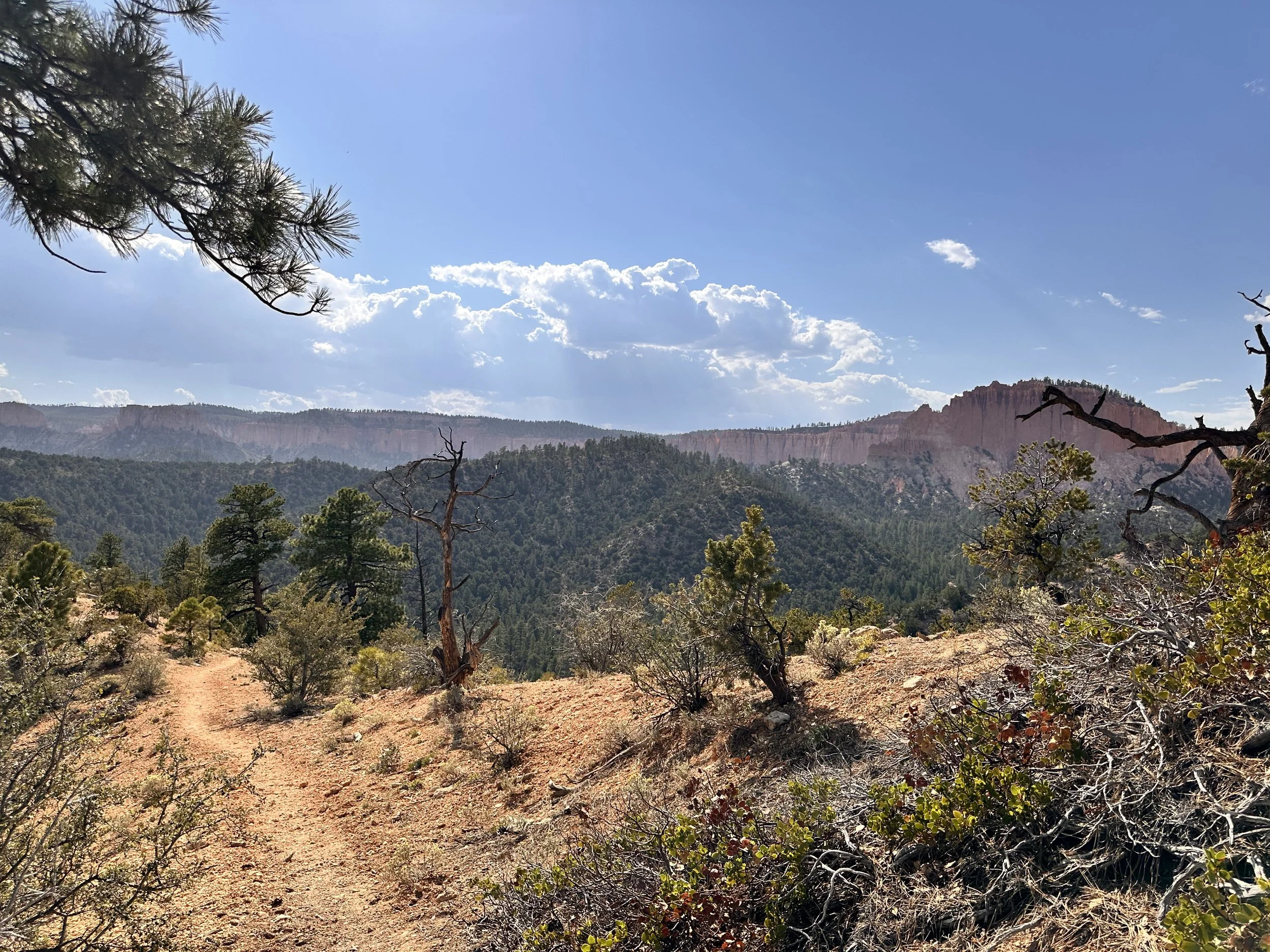
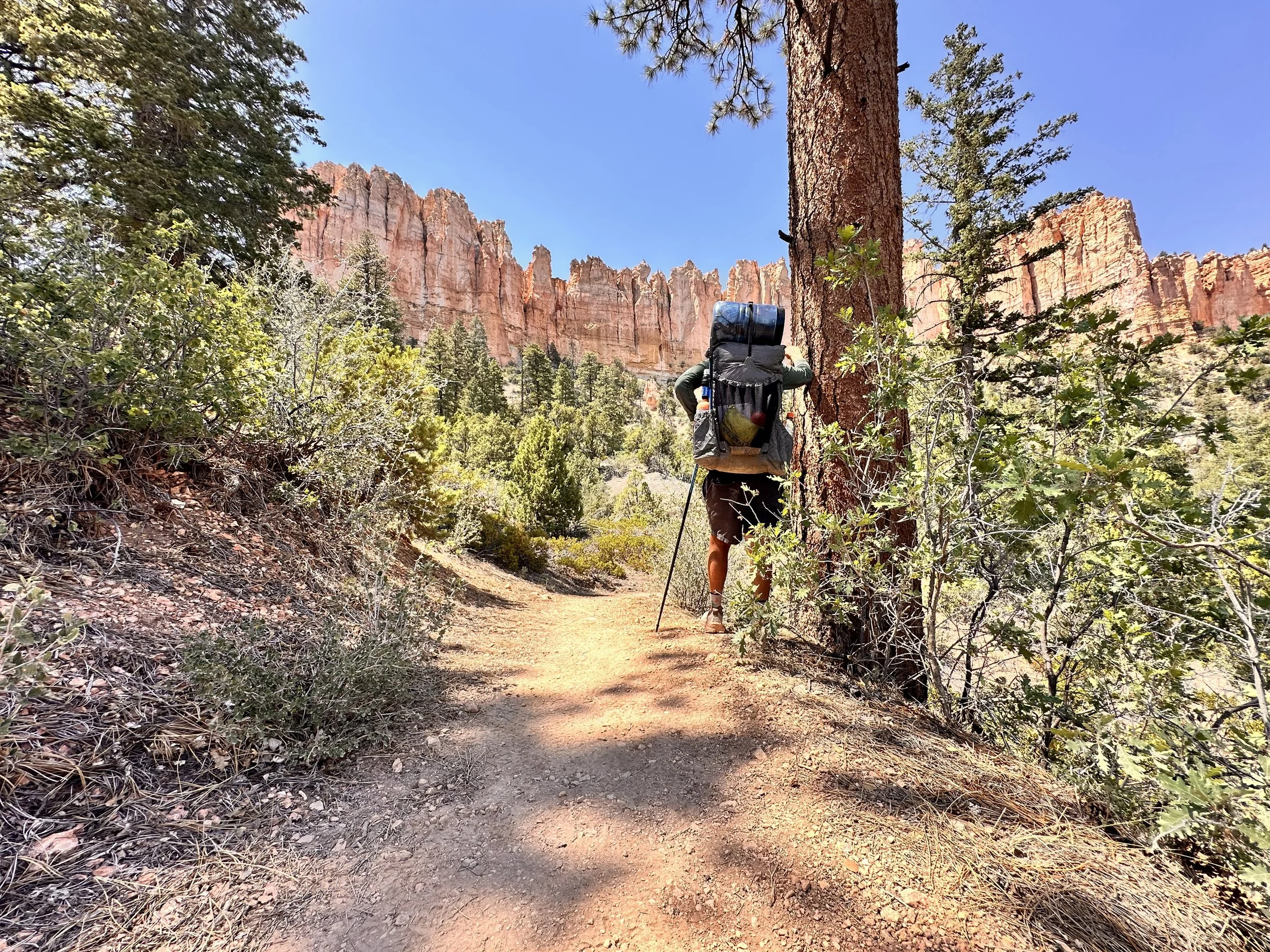
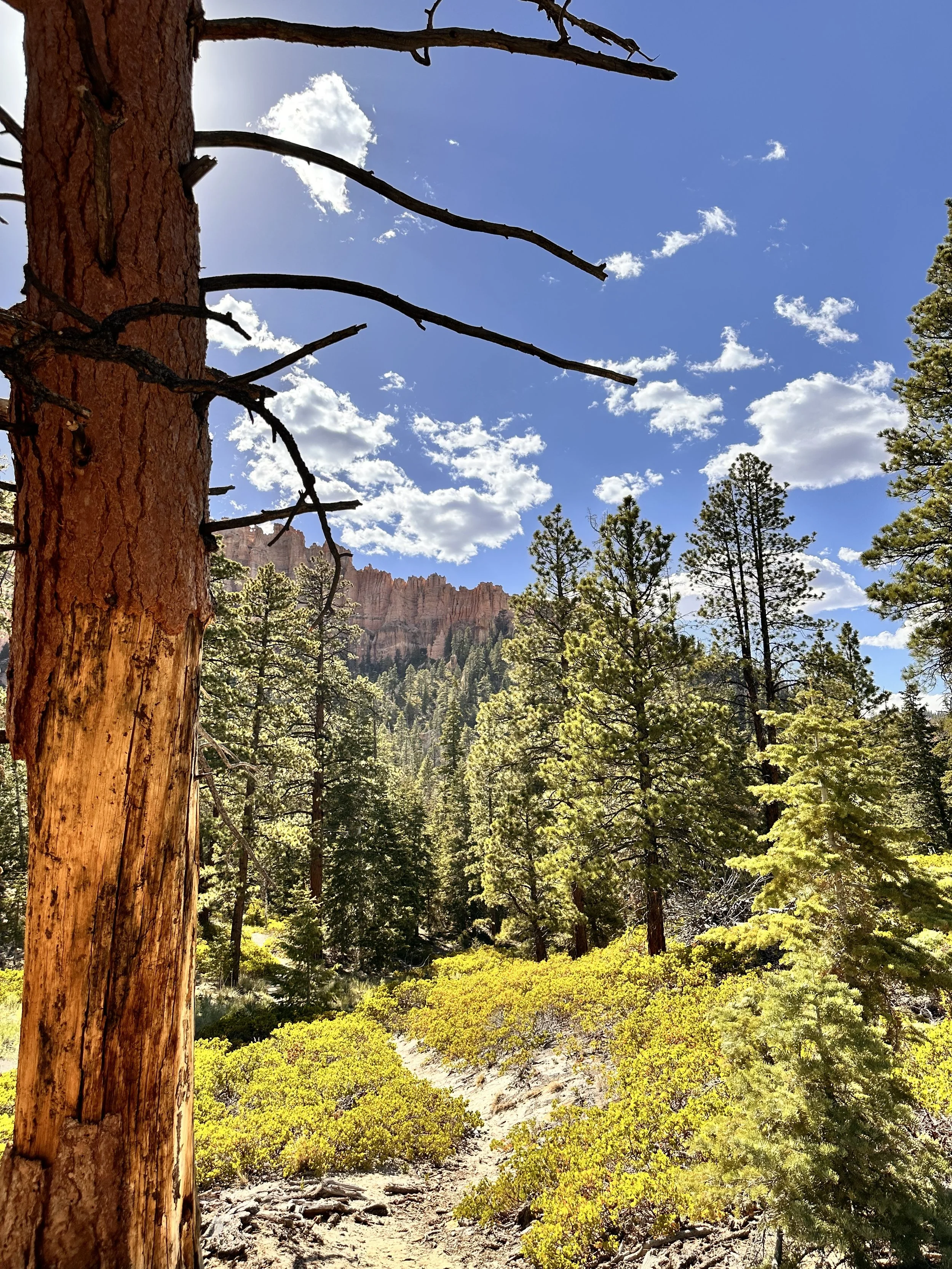
With fresh legs and a full day ahead, I continued on the Riggs loop trail towards Rainbow Point and my water cache. The scenery was mostly shaded forest with the Yovimpa Point pink and orange cliffs high above like a cathedral. But the July sun was beginning to make its presence known as I climbed up out of the forest making my way to rainbow point. Every mile reinforced how demanding desert backpacking can be. By the time I completed the Riggs loop and made it to my water cache at Rainbow Point, I enjoyed a liter of water under a shade tree with a view of where I’ll be for the next 3 days. After a short siesta, I started on the Under-the-Rim trail descending from Rainbow Point to Iron Spring campsite.
Ty Trek note: Don’t rush the good parts. A little shade, a full water bottle and a view are sometimes reason enough to take the pack off and stay awhile.
Day 3- Water Wins
Iron Spring Campsite → Yellow Creek Campsite
Distance: ~14 miles
Elevation: ↘ 3,057 ft | ↗ 2,334 ft
Water: Started with 1 liter from Iron Spring + 2 liters cached at Swamp Canyon + Yellow Creek at camp
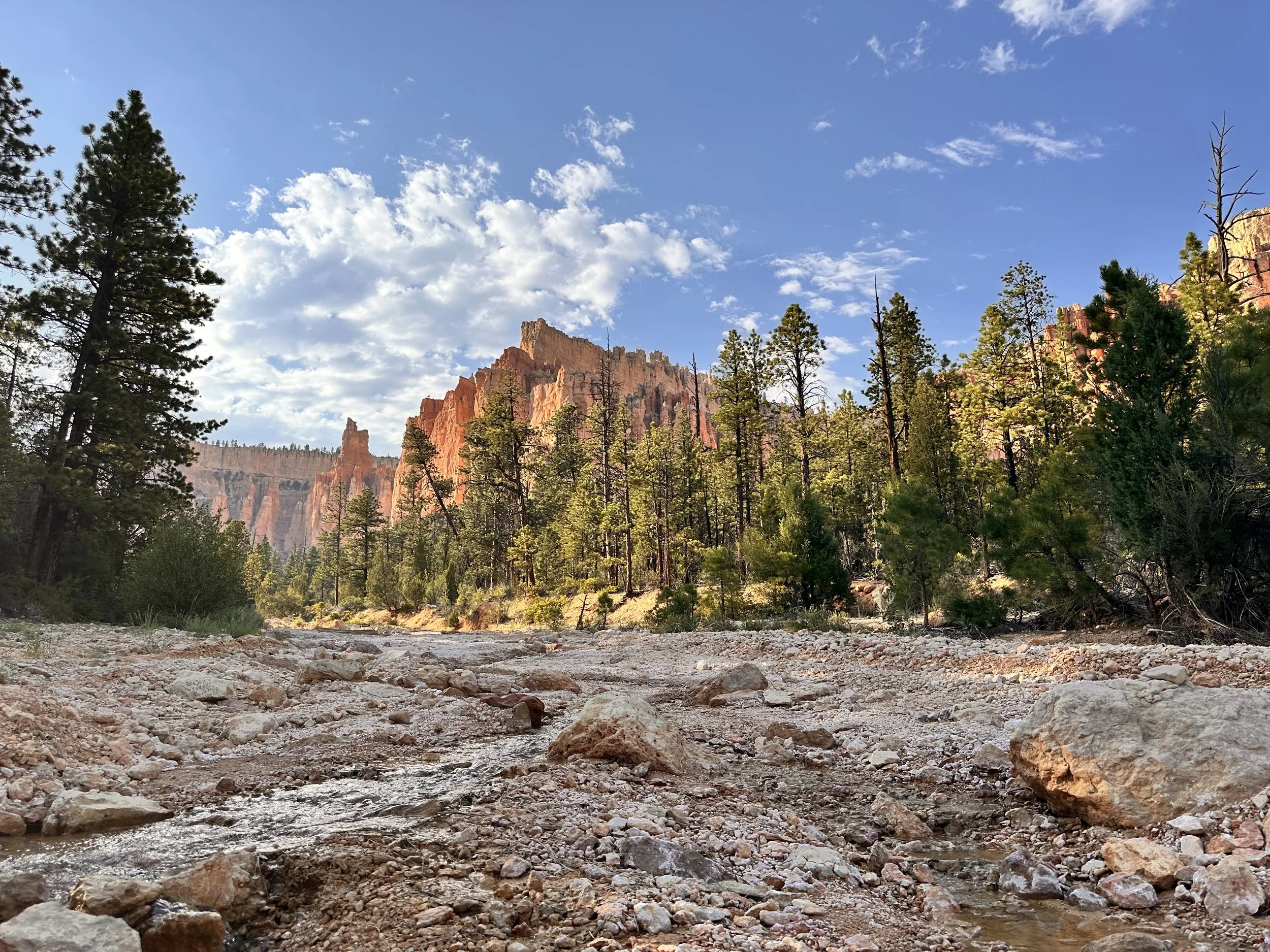
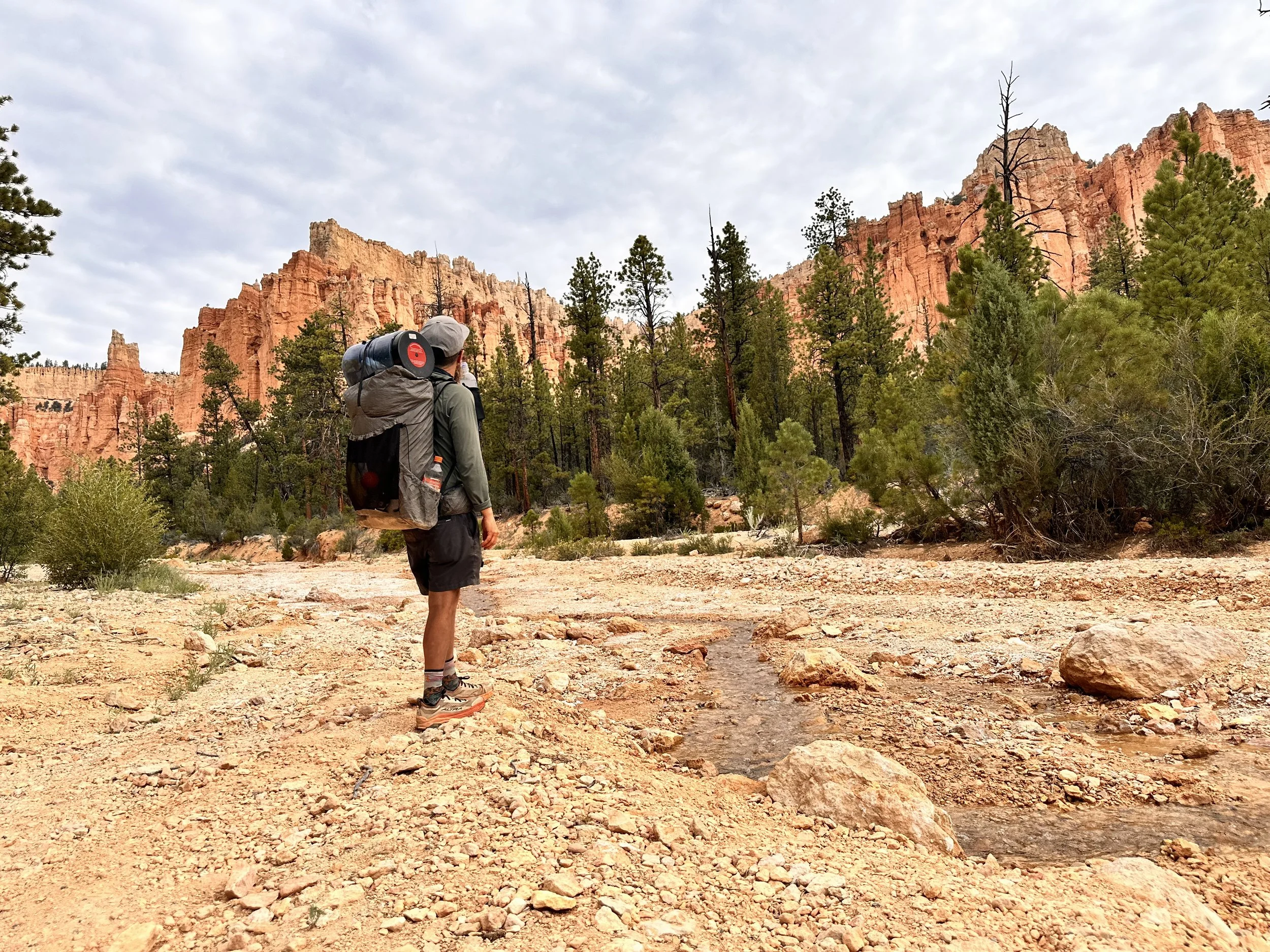
My original plan was to spend another night at Swamp Canyon using the water cache I had left but Bryce Canyon had different ideas. The heat had taken more out of me than expected and it became clear I didn’t have enough water to comfortably make it through the night and the following day. Rather than forcing the itinerary, I adjusted my plans and pushed nearly ten miles to Yellow Creek, one of the only reliable natural water sources along the route during my trek.
When I finally reached the creek, it felt like finding an oasis. After days of carefully rationing every sip, I filtered cold water, drank deeply and simply sat beside the stream soaking in the relief. In that moment, Yellow creek didn’t feel like a small desert stream but more like a mighty and life giving as the Colorado River. It was a powerful reminder that adapting to the trail isn’t failure. Sometimes it’s exactly what the wilderness asks of us.
Ty Trek note: In the high desert, especially in July, water is life. Your itinerary is just a plan. When the two disagree, water wins.
Day 4 - Climbing Back to the Rim
Yellow Creek → Bryce Point
Distance: ~9 miles
Elevation: ↘ 903 ft | ↗ 1,626 ft
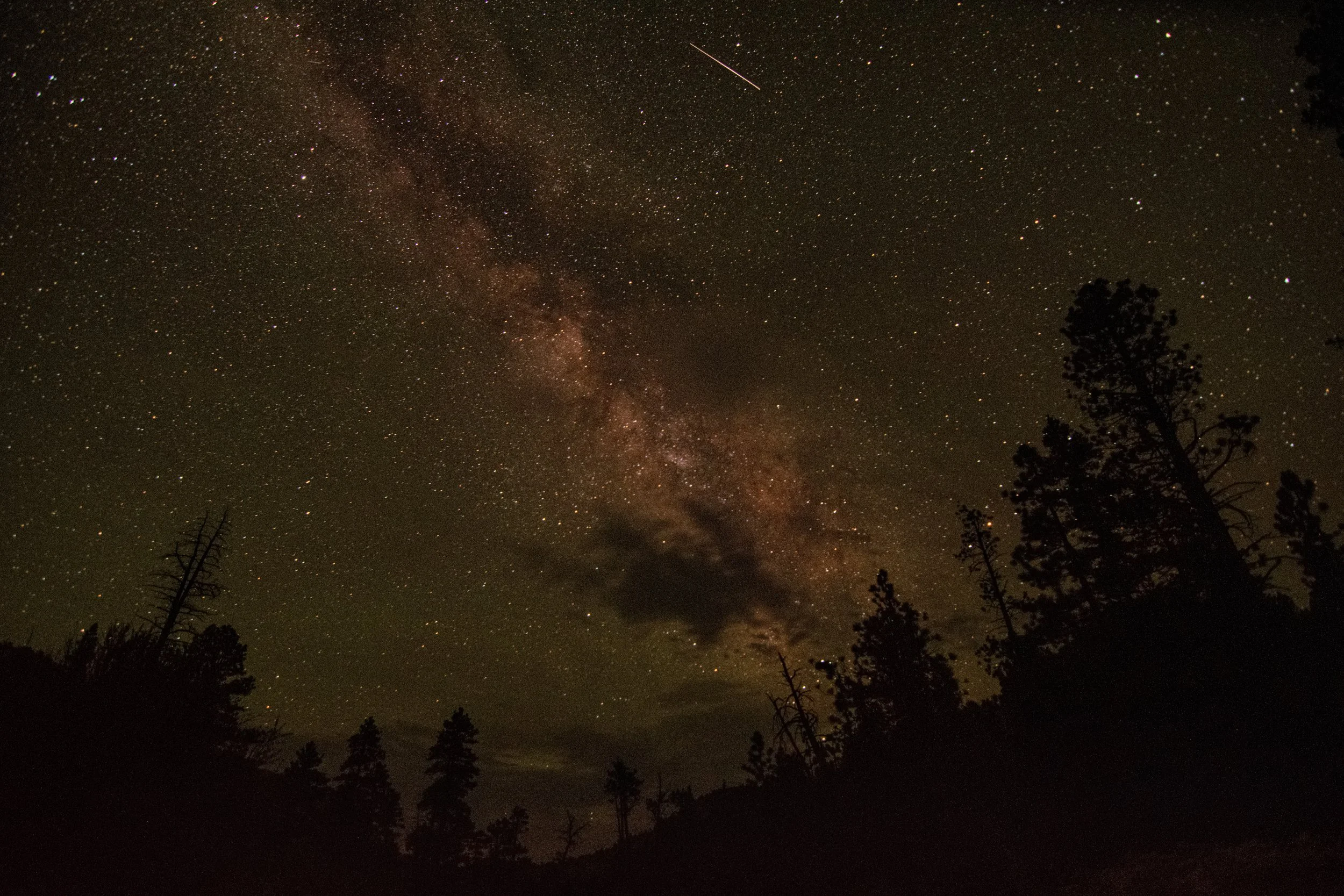
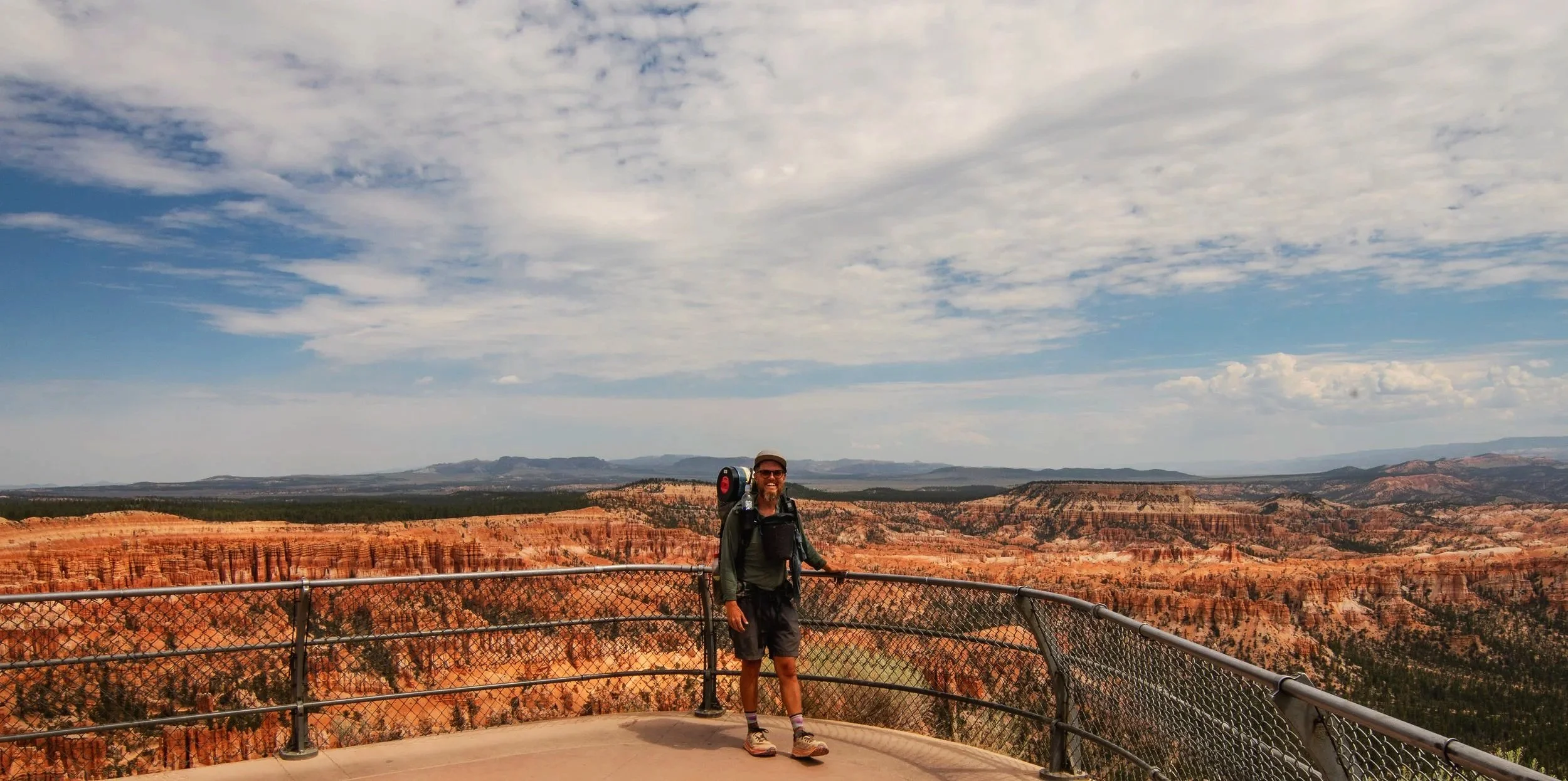
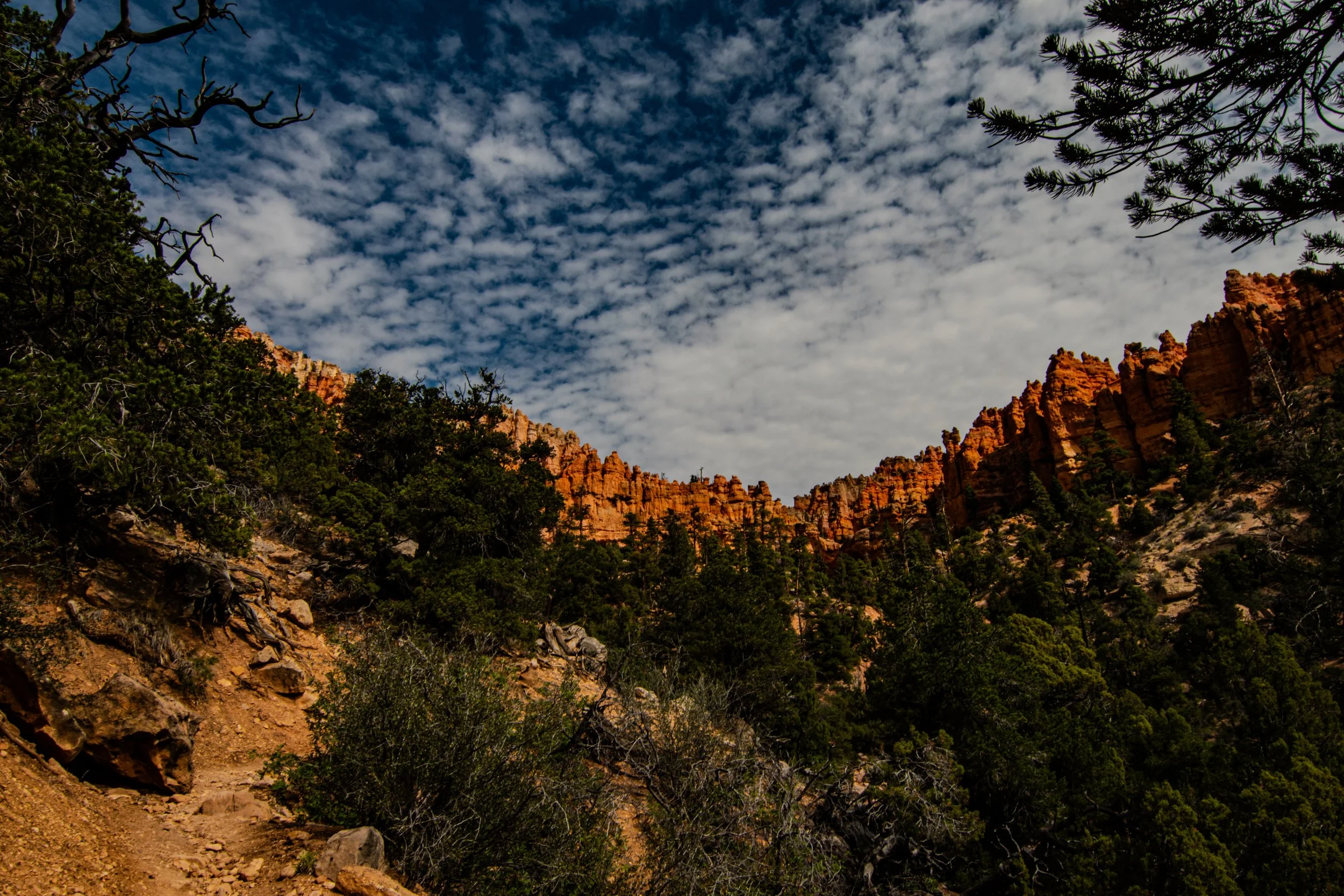
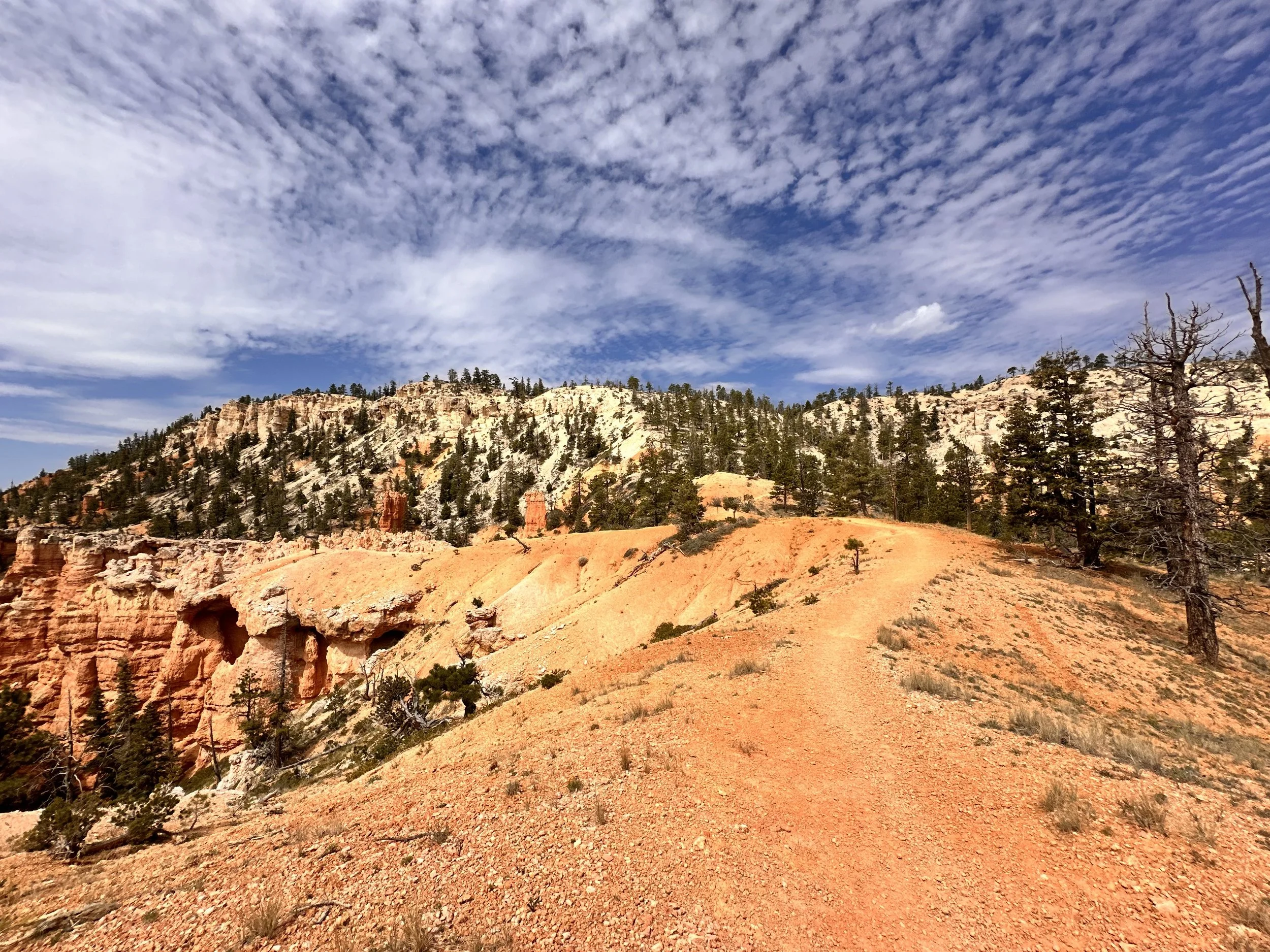
Refreshed by the cool water and a good night’s rest, I hiked the final miles toward Bryce Point. The climb back to the rim offered one last chance to appreciate the towering cliffs, endless hoodoos, and quiet beauty that make the Under-the-Rim trail so unique. Emerging back among the crowds, it was hard to believe that only a few miles away existed an entirely different Bryce Canyon. One defined not by overlooks, but by solitude, resilience and unforgettable nights beneath some of the darkest skies in the country.
Ty Trek note: There’s something about that final morning on trail, you’re ready for a shower and a real meal, but part of you already misses the simplicity of waking up with nowhere to go but forward.
Final Reflections
The Under-the-Rim trail wasn’t the trip I had planned. The heat forced me to adapt, the miles humbled me, and a small creek became one of the most memorable moments of the journey. Yet somewhere between the relentless sun and the brilliant night sky, I was reminded why I keep coming back. Backpacking strips life down to what matters most, and every trail leaves me with a little more perspective than I had when I started.
Leave it Wild
Places like this deserve to remain wild. Pack out what you bring in, leave what you find and give the next traveler the chance to experience the same wildness.
“May your trails be crooked, winding, lonesome, dangerous, leading to the most amazing view.” — Edward Abbey
Happy Trekkin’ Ty